A Familiar Tune by Heather

Heather is a worker in a hard-to-reach place.

Last Sunday night the four of us went to see our friend’s daughter perform at a violin concert. Her teacher, who performs with the Hanoi Symphony Orchestra, hosted the event for his students. He introduced each one adding a few words of praise and encouragement.

When the first-year violins screeched on a high note or faltered over a forgotten measure, the teacher was the first to applaud them at the end. One of the students, a seven-year-old, tripped over a few difficult notes and froze in the middle of her piece. Without hesitating, the instructor picked up his own violin and began playing from where she left off. The student followed his lead until he lowered his violin, and she finished the piece on her own.

I’ve been thinking about that moment all afternoon.

Sometimes when we sit down to pen these letters, we feel a pressure to communicate how well we have performed our work. Our minds and hearts are always drawn toward a subtle idolatry of self. We turn life and ministry into a performance, and put ourselves in the spotlight. I was convicted of this as I stared at the blank text box anxiously wondering what to write.

I didn’t want to admit that I’ve been tired these past few months. I took on too many responsibilities this year and have scrambled to keep my commitments. I’m dragging to the end of this school year just glad to finish and trying not to worry whether I’ve finished well. I feel like the poor first-year violin student who stumbled and stalled and needed her teacher.

Thankfully, we do have a gentle teacher who is watchful and who knows exactly how the music should be played. When we make mistakes and lose track of the melody, he leads us forward by playing the familiar but momentarily forgotten tune.

I’ve been reading First and Second Corinthians in recent weeks and came across this today, “My grace is sufficient for you, for my power is made perfect in weakness” (2 Cor. 12:9). The violin student’s flawed performance unexpectedly revealed her teacher’s kindness and skill.

In the same way, our failures are sometimes the crack through which the blinding light of God’s grace and goodness and perfection shine. In 2 Corinthians, Paul continues, “Therefore, I will boast all the more gladly of my weaknesses, so that the power of Christ may rest upon me.”

While it seems odd to send newsletters about our insufficiency, I will do so with Paul in hopes that you can hear the sweet, familiar tune of the gospel and catch a glimpse of the One who plays it perfectly. May we be reminded together that the grace of God is sufficient when our own strength fails and that the glory of Christ is revealed in our weakness.
Mistaken Identity by Lorraine Triggs

"You look Russian," our missionary friend Cindy assured me as we climbed up the stairs from a Metro station near Red Square. "Just don't smile." It was 1993—still the early years of the fall of communism—and we were headed to two different protest rallies on opposite sides of Red Square. We had heard news about the two events on the same day that Russia's Parliament was trying to remove the president and go back to the way things were.

One was a pro-communist rally; the other a pro-democracy rally. All this on my first trip to Moscow. For someone who apsired in some ways to journalism, this was a dream come true. Some missionaries were afraid and were staying huddled in their apartments. We, perhaps stupidly, wanted to run right to the rallies where the news was, where history was happening.

Okay, I look Russian and I won't smile, I told myself as we arrived at the pro-communist rally first. I thought about the woman on the tram earlier in our trip who started talking to me in Russian. As long as I stayed mute, I could be mistaken for a Russian citizen.

The first rally was eerily silent. Protestors were mainly pensioners in dark winter coats and Russian hats. No one talked or milled about. The red and gold hammer and sickle flag was carried by more than one protestor. Men wore military medals on their coats. There weren't thousands of people, but they were all standing as if in formation, facing a lone man who was shouting his anti-deomcracry speech through a portable speaker.

We walked behind the protestors without a word, on our way to the other rally. We reached a street where we saw a row of Russian soldiers on horseback, Moscow police, police cars and whole bank of ambulances. They were primed for violence.

"Oh, look," Cindy said, "Lorraine's jacket is the exact color of the new Russian flag." The blue color was not welcome in this all-red rally where people were angry and longing for a return to the past. And Cindy was right--the blue of my jacket was the exact shade of blue on the new flag.

So would those people think I was Russian, but the wrong kind of Russian?

Thank you very much, Cindy. I just wanted to get safely by the pro-Soviet soldiers and the armed police. Why do you think I wasn't smiling or talking. Fine with me if you mistake me for a Russian citizen and not an American.

We crossed Red Square, quiet and pensive. When we finally reached the pro-democracy rally, nothing could have been more different. For starters, the crowd was huge and milled about, talking and laughing. No people in formation or angry speeches screamed. There were children with their parents, students and all people of all ages. Ice cream vendors were selling ice cream. Street musicians were playing music. Jugglers. It was like a carnival. I breathed a sigh of relief that I could smile and talk again, and shake off my mistaken identity.

I felt free to be myself.

And I think in some ways, the same feeling was true at that time for a lot of other people coming out of the spell of the Soviet Union. They weren't Communists anymore. They weren't Soviet. Some could whisper a confession of identity, like the dear friend who travelled with us and whispered that her mother was a Jew, something she could not openly admit for years. I hugged her because we shared that same heritage with our mothers. Finally, she could admit who she was. But more important than that bond was the most important bond: we were both followers of Jesus Christ.

It's a little bittersweet to look back at this point with all that's happening with Russia and Ukraine and America and the rest of the world.

The danger with mistaken identities is believing that they are the real deal. We can even fall for it ourselves. We can define ourselves by our politics, the bloggers we follow or don't follow, our successes or failures. It's so easy to let those little bits define us—our genetics, our politics, our careers, skin color, gender, academic studies, bank accounts, the cars we drive; there are so many ways for us to create mistaken identities. Those things are not who we really are. 

Think about the Apostle Peter on what was probably the worse night of his life—his denial of Jesus. Try as he might, there was no mistaken identity for Peter as he huddled around the fire. A servant girl and two other people knew that Peter had been with Jesus. 

Being with Jesus is what defined Peter, even at his lowest point, even when, scared, he denied it. And it is what needs to define us as children of God at our lowest or highest points. Let's work at letting people see us for who we really are, and let's be who we are—children of the living God, which is the very best identity that any of us could aspire to.

Lavish Waste by Wil Triggs

That God doesn’t waste things seems fairly obvious, but there are a lot of different places that the human mind can go with this. I have sometimes felt like that perspective puts God into a miserly, pre-ghost-visit Ebeneezer Scrooge. Thinking devotionally, this is not helpful for me. I do not aspire to be that and when I think of God as my father, it doesn’t seem like a helpful image.

Yes, the leftover baskets of bread and fish were given to the poor—but the lavish part of the miracle was that there were leftovers.

So perhaps there are other associations to consider when thinking about God as not wasteful.

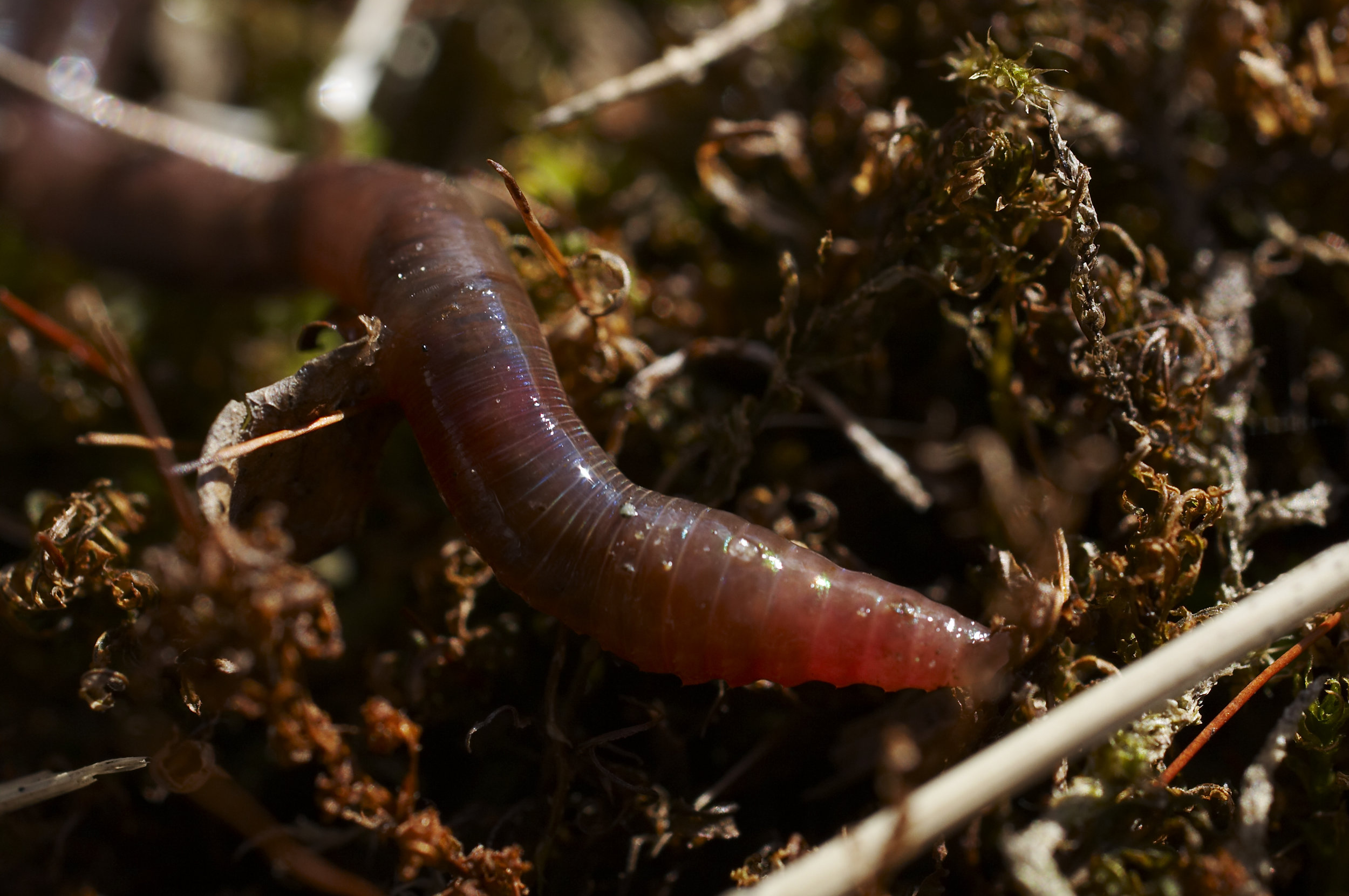
A few years back, when I was a missionary with Russian Ministries (now Mission Eurasia), one of my associates (Elaine) and Lorraine and I all got into worm composting, or vermicomposting. I drilled holes in the sides and bottom of a lidded plastic bin. Next step in making the home for worms to live, eat and propogate is to put bedding in. Lorraine and I chose coconut husk mulch; Elaine shredded newspaper. Both mediums needed to be moist.

Then you add worms and bury them. You can order them online or get some from a fellow vermicomposter if you can find one. You don’t really need to bury them much because they will make their way on their own.

Then you just put your non-meat-scrap garbage in, cover it with a bit of the medium and wait. Every day you can add more garbage, cover it with a bit of the medium. I think it becomes a kind of oasis for these worms. Fresh garbage every day—egg shells, banana peels, coffee grounds, grapefruit halves after the fruit is scooped out. I like to think of it as a sort of tropical resort or a cruise ship for worms—all they have to do is eat, reproduce and make the castings, which become the nutrient-rich mulch.

The hardest thing to believe, and even now as I type this I know people will think it’s not true, is that there is no bad smell to this. There really is no garbage smell.

After a few weeks, we would take our bin outside into the sunlight and open the lid. Worms squirm their way to the bottom to get away from the light and you can start to take out the mulch. We had a little pail and got a good amount of the castings. I remember pulling out what looked like a piece of lace one time and realizing that it had once been a cantaloupe rind. When we got to the bottom and there were mostly worms with just a little castings left, we would add a fresh batch of coconut mulch, put the lid back on and start the process all over.

We would put the fresh black mulch at the base of our vegetable plants. Some people make a tea from the castings or pour it on the plants to feed and water them at once. The plants seemed to thrive with this feeding. The food would grow and when we picked it and ate it, the onion tops, tomato stems and other bits would go back into the worm bin.

There is a lot of creativity in not wasting—at least, in God’s style of not wasting—maybe more like a performance artist of the universe than a Dickensian Scrooge figure. When God spoke, the “without form and void” earth began to take on order—light from darkness, waters under the expanse and waters above it, dry land and sea, and the earth, the earth full of vegetation, plants and trees. And a couple of creation days later, I like to think that worms began their composting work.

All this lavish creation waiting and ready for us, created in God’s image, made a little lower than the heavenly beings and fallen short of the glory of God.

So, here’s to the real Ebeneezer and the God above all others, who isn’t stingy with his fallen creatures in desperate need of his grace and help.

Then Samuel took a stone and set it up between Mizpah and Shen and called its name Ebenezer; for he said, “Till now the LORD has helped us.” (1 Samuel 7:12)

Note: apologies to Pat, who, based on her latest journal entry, Bugged, has a hard time with spiders, bug, and surely worms.

Bugged by Pat Cirricione

I absolutely do not like gardening. I have tried to like it many times throughout various stages of my life. If my father were still alive he would regale you with stories of how gardening and I do not get along with one another. The few times he asked me to help him plant tomatoes, I was always so excited and eager to help. But the minute a spider or an earthworm  crossed into the path of the beautiful dark soil in which I was digging, I would fling the garden hoe into the air and run, screaming into the house.

Bugs just give me the creeps. They creep, they crawl, they fly, they bite. A bee flying around me would send me into fits of hysteria (not a pretty sight).

On the other hand, my sister loves to garden. She has turned her back yard into a beautiful English garden. There are birds houses in various trees, wisteria,  lavender--beautiful paths to walk on, with benches to sit on under beautiful trees. I used to just love to look out of the window of her kitchen into that beautiful garden. I even tried sitting on one of the benches once, until I was attacked by a bee that would not leave me alone.

My husband loves to garden, and I enjoy eating all of the things that he eventually harvests; however, about the only time I go out to look about, and admire the work he has done, is when he asks me to bring him a glass of cold water.

Insects seem to love me. Cookouts are enjoyed by the rest of the family, while I eat my food inside. If I eat outside I am immediately surrounded by gnats, bees and mosquitoes. While some are trying to enjoy my food, others are trying to enjoy my blood. A picnic has ants that crawl up my arms and legs. I wish I could enjoy them, maybe even give them pet names, but no, I get hysterical as I try to brush them off, away, onto someone else (not meaning to do so, it’s just that when my arms go flying there’s no telling where they might land).

So how a snake could ever have convinced Eve to take a bite of an apple is just incomprehensible to me. One look at that snake, and a talking one no less, would have sent me screaming into Adam’s arms, panting and puffing and pointing at something so hideous!

Yes, I do love gardens, and I admire those who garden. They are so nonchalant about just moving those pesky, creepy, crawly things out of their way while going about planting. As for me, I will stick to house plants.

Although even then I have been known to fling the potted bag soil into the kitchen's stratosphere if a spider nonchalantly walksout of the bag'

I mean, really, how did that get in there!

As Mothers Love by Wallace Alcorn

My mother was, I suppose it could be put, an ordinary woman. She never graduated from high school (indeed, never allowed to do so), and she had no profession or trade or even what might have been considered an occupation—unless it was housewife and mother of two boys.

Her father wouldn’t allow her to attend the Milwaukee’s Girls Technical High School longer than what it took to learn to cook and sew, and then she had to go out and work until she had her own family to care for. (This did not, however, keep her from becoming the academic advocate for her younger sisters who did graduate.) She dropped out of the workforce to raise her boys and returned to help in the war effort, and then continued so she could pay her boys’ college tuitions.

Mom was ordinary in the sense of being-in-the-order-of motherness. One of her sisters told me, “Your mother is one bundle of love,” which is pretty good coming from a kid sister. 

  She was of a background where you restrained direct expressions of love to children lest they get big headed or become spoiled. You just love (active verb here), and they’ll know. But every now and then someone would tell me with understanding amusement that Mom would say, “I never graduated from high school, but both my sons are Ph.D.s!”

When I tried to tell her I loved her, she would give me a gentle shove and mutter, “Oh, go on now.”

She came to worry I had become a professional student and would never marry. Once, while ironing my shirts, she looked at me and said softly but most earnestly, “Wallace, I hope you marry a girl who will let me love her.”

Not, mind you: “whom I can love” or “who will love me”—but “who will let me love her.” That Mom would love whomever I marry was never an issue. This determined love was born within her about the time I was, and she nurtured it within for twenty-eight years until it finally burst out as confession, which I took as mandate precisely because I loved her. The least I could do was to present her with a daughter to love.

When I found Ann Carmichael, I arranged with a friend to buy rings and send them by air express to me in a Grand Rapids seminary. My father returned from work to find my mother packing an overnight bag, and he asked where she was going. Without pausing or looking up, she said, “To meet my new daughter.” She had scooped up the rings and was going to deliver them to me herself.

I asked Mom to stay out of sight long enough for me to put the engagement ring on Ann’s finger—and then present her to Mom as her new daughter. It was love, sight unseen and unquestioned. I didn’t meet Ann’s mum (like Ann, British-born) until after we were married, because she had left her parents in Ghana in order to finish high school in Florida. I later learned that she had assured her mum that I would be a good husband “because he is so sweet to his mother.” Of course.

The last time I saw Mom was in an Indiana hospital. Both our daughter and my nephew’s wife were expecting babies, and Mom had been looking forward to the arrivals of two great-grandchildren. But she knew this would be it.

With contented joy, she let go and said, “Tell the little ones I love them.”

Surprise Wedding, Garden Reception to Follow by Wil Triggs

It was the Soviet Union, when Ukraine and Russia were the same country, and Christianity was second class, or even worse. Foreign visitors to church were rare. Actually, visitors of any ilk were rare because going to church was, according to propaganda, backwards at best, ignorant and embarrassing.

So, I found myself in Ukraine, my first time in Odessa, well before Odessa Theological Seminary was permitted to exist as an institution of higher learning. People hand-copied the Bible or portions of it. The Christian faith could close doors on academic careers and careers in general. If you went too far, you could be sent to labor camps or admitted against your will to a psychiatric hospital. To believe in a god you could not see was crazy, irrational. The Soviets had documentation that Christians drank blood and sacrificed children.

To me, however, Ukraine was a sort of garden. Things grew there. The people were welcoming, friendly even. It was refreshingly agrarian.

On an earlier visit to Russia, when I expressed interest in visiting Ukraine, a Russian acquaintance shrugged me off. “Ukrainians are just silly,” she said. “There really isn’t a good translation for what I mean.” Don’t waste your time. Looking back, it seems like an eerie premonition of the war we call a conflict raging now under Vladimir Putin.

In the Soviet Union, going church was a highlight of any visit to either country. I still remember the people I met, the choirs, the long impassioned prayers, the recitation of poetry as part of worship, three or sometimes four sermons, including greetings from guests like me from America, women with scarves on their heads praying, weeping, praying more, men in buttoned suits and big ties, and eyes weary of manual labor jobs eating up their days; then trying to teach from the Bible with almost no training or resources.

We gave our greetings from our church and Christians in America. I probably mentioned College Church specifically.

As I looked out at the congregation, I saw in the front row, a young man in a suit sitting next to a young woman in what looked to be a wedding gown. They sat through the multi-sermon, multi-hour service. At the end of the service, the pastor called them to the pulpit. They both stood up with some friends and family, and they were married. A Russian-German man who was traveling with me explained afterwards that this was the way Christians married there. Instead of the focus of the marriage at a Soviet wedding palace, with flowers placed before a statue of Lenin after the ceremony, Christian weddings were part of church services.

The worship service that morning was closer the three hours than two. But the wedding part of the service was probably only ten or 15 minutes. After the service, the man who stood up with the groom (I guess they have “best man” tradition like us) came up and invited us to the wedding reception/party. He said that it would be an honor for them to have us with them at the celebration. We went. We ate amazing food the women of the church prepared. It felt like we became part of the wedding party. We were included in the wedding photos. We ate more. We gave them greetings and best wishes for their new life together. They told us that God had brought us there from across the globe to witness their wedding and be a part of the service. They had a special place for us to sit. We kept eating—the food never stopped. This went on for hours. And the cakes over there are so very different from ours.

At a certain point, I wandered away from the festivities and walked in a cherry orchard. The sweet cherries were hanging from the trees. I remembered trips to Cherry Valley (California) when I was a boy and eating all the cherries I could at the pick-your-own orchards. Suddenly, there I was with sweet, ripe cherries dangling from trees in Ukraine, and I couldn’t help but wonder at God. It was really amazing that he had brought me to this place.

The Christians there saw that truth better than I ever could. God brought us to the wedding, and that made us special people to them. I will likely never see the wedding couple again until heaven.

But I rejoice that wedding feast in Ukraine and the bride and groom and all of the wedding guests will join me at another wedding feast that the Lamb has prepared for us in heaven; a feast that as the bride of Christ we will enjoy forever with him. 

The Seed Sweep by Virginia Hughes

Seeds, wherefore art thou?

I harvested you last fall.

You were dried, and put into labeled envelopes for safekeeping. As I search the logical places; are you here? No, I can't find you. Jesus told a parable about a woman who looked for a lost coin. She swept the house until she found it. When she found it, she was so happy, she told everyone and had a party to celebrate. What jubilation in finding something important that was lost. The point of the parable is how much greater joy there is in the kingdom when one lost soul is found. Souls are obviously way more important than seeds. A much lesser point, yet practical, is maybe I should sweep my whole house if I'm going to ever find those seeds. Alright, let the sweeping begin.

Seeds, am I going to find you? 
You are of no use hidden away at planting time. Remember the guy who so proudly hid his talents to keep them safe, only to face an angry master who wasn't happy when his servant did nothing with those buried talents? Well, do not return to this home, master, because I can't even dig up a hidden talent right now. Instead I read about a date palm seed that germinated after being hidden for over two thousand years. Someone else claims to have germinated an even older seed. I don't want to wait, much less look for two thousand or thirty thousand years for lost seeds, but there’s always next year. I'm not giving up.

Seeds, where are you?
I care so much for you that I lost all track of you. It's embarrassing. I am nothing like the good shepherd finding the lost lamb and tucking the little love safely back into the fold. We relish the care of the good shepherd. I thought I kept you seeds closely tucked into my end table drawer, but you aren't there. I will keep looking.

Seeds, what’s the big deal?
I could buy any kind of seed nearly anywhere right now, but I don't want just any old seeds. I want my seeds. The zinnia seeds that grow three to four feet tall and branch out like small shrubs with giant flowers resembling small roses and dahlias in full bloom all summer. The smaller bright orange Lilliput zinnias named after the island of tiny people in “Gulliver’s Travels.”

Seeds, I am also missing . . .
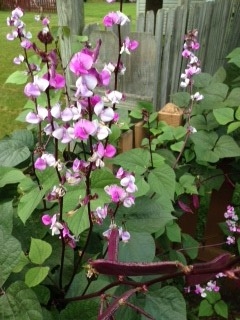
where are you, Hyacinth bean vine seeds? Tough looking beans as hard as pebbles, which must be soaked before planting. They send up heart shaped leaves on deep burgundy stems with exotic purple and white orchid shaped flowers. Within a few weeks, the vine rambles up a small fence or covers a castle’s walls in a fairytale. Their growth potential is intimidating with botanical intellect and primeval secrets growing straight up for Jack to climb the beanstalk. The purple bean pods hang in burnished bunches in the spectacular autumn sun.

Seeds, that feed us . . .
You endearing and delicious Box Car Willie tomato seeds with your cute and storied name. These are named either for homeless men who rode the train rails during the Great Depression, carrying these seeds around as gifts. Or, they are named for Box Car Willie, a country singer, who sang songs about trains, depending on whose story you believe. The tomatoes from these vintage seeds are bountiful, beautiful and full of heirloom flavor.

Seeds, are full of hope . . .
The smallest seed I ever planted was a poppy seed which looks like the period at the end of a sentence. Then I learned there are even smaller seeds. Certain orchids from the tropical rain forest produce the world's smallest seeds with one seed weighing one 35 millionth of an ounce. These seeds are dispersed into the air like minuscule dust particles, ultimately landing in the upper canopy of the rain forest where they attach to trees and get flecks of sunlight and humidity driven moisture enough to survive. Orchid seeds are smaller than a mustard seed, but remember the mustard seed was the measure for how much faith it takes to move mountains. We learn it's not the size of one’s faith but the power source the faith plugs into that makes all the difference. Mustard seeds float around in pickle jars if you want to see how little those are.

But what if you don't have seeds? Then what? What if there is no seed to plant? Ground won't stay bare unless it's blazing hot dessert sand with no rain, or steaming volcanic ash. Seed is wind-borne. It's dropped by birds and buried by squirrels and mice, and other critters. There are all sorts of seeds, but they aren't all worthy of your time. It's wise to be selective. I want to plant beneficial seed that is watched, watered and tended in my garden and in my life.

Seeds, are worth looking for. . .
Their existence proves there is something that came before the seed. Or better, someone, who created all things including seed bearing plants. So, I'm praying to the someone who knows where I stored my seeds. While I look for my lost seeds, I pray that the Lord will help me find them.

Seeds we can't lose . . .
These are the prayers we plant in our lives today, right now, when we talk to God about everything. He prompts us to care for each other. Call a friend. Open a door. Walk with a neighbor. Practice forgiveness. Listen to a lonely voice. Read the Bible. Provide a ride to someone who cannot drive. Share a meal. Smile.

And I'll keep looking for my seeds as I sweep my house clean.

Update from Virginia: Lost seeds found. I just found my missing seeds in the bottom of a drawer, turned over with other envelopes placed on top of them. WhenI emptied the drawer, I wondered, "Why are these envelopes in here all haphazardly?" I didn't think they were my seeds at all. I reached in to straighten out the envelopes I figured were empty. Then the most welcome sound of seeds shifting met my ears. They are labeled and accounted for.  lifted out one after another of the envelopes and felt a rush of relief and gladness.

Be Strange by Lorraine Triggs

My mother delighted my sisters and me with her creative spin on the English language. By far, the expression we loved the best and repeated the most was "Shut the rain, the windows are coming in." She would shout this to us whenever a summer storm blew in. We dutiful daughters would then run through the house and close the windows.

The runner-up to "shut the rain, the windows are coming in" happened one evening as we said good-bye to company who had come for dinner. At my mother's house, guests neither arrived nor departed without a fuss being made over them, and that evening was no different. As our family friends walked down the front walk, my mother called out, "Be strange!" (a rather loose translation of "Don't be a stranger.")

For weeks on end, her dutiful daughters repeated to each other, "Be strange," as if any of us needed encouragement in that direction. 

Actually, my mother had no idea that she had uttered a profound biblical truth. She didn't have time for heady talk about a Scripture passage. If the Word said to practice hospitality, then she would do just that. It didn't matter who you were or what you did for a living, the door to our home was open. In retrospect, I am sure we entertained angels disguised as strangers.

That brings us back to the profound truth that as followers of Jesus we are strangers in this world, but we don't treat other people as strangers. We love them. And that's strange, especially in our insular society and partisan world.

Our band of followers includes the likes of Abraham, Isaac and Jacob who "acknowledged that that they were strangers and exiles on earth" (see Hebrews 11:13) and being strangers who didn't realize that they were paid an amazing compliment, "of whom the world was not worthy." (Hebrews 11:38)

The Apostles and church fathers didn't have time to squawk about first ammendment rights or call a center for law and justice to defend them. Those things didn't exist back then. They were preoccuppied with faithfully following Jesus, taking the gospel to all nations, ending up hiding in caves or being sawed in two, telling a jailer about Jesus or praying to be faithful when they faced the jaws of a lion or a gladiator's sword. 

We are a "peculiar people." (1 Peter 2:9, KJV) We are not a voting bloc or cultural movement or naysayers. We are more than that. We are followers of Jesus, who had "nowhere to lay his head." We are strangers en route to a better country.

So to quote my mother who has been in that better country for a few years, "Be strange."