The Great Homesickness by Rachel Rim

When I imagine childhood, that crescent of time when we’re somehow more human than we’ll ever be again, I picture strips of asphalt and living room windows. For the first seven years of my life, my father pastored a church an hour’s drive away from home. Since the small group my family attended always met in the houses of its more proximate members, it sometimes felt like we were eternally making our way home. Sitting in the backseat, drifting in and out of our parents’ conversation, my twin sister and I would gaze out our car seat windows in that hazy twilight between waking and sleeping.

By the time we turned off the freeway and into our quiet neighborhood, the world outside was a dark blur of shadows broken only by the occasional lights left on in people’s houses. Drowsy, wrapped in my own tangle of arms and legs, the warm air from the vents billowing out the Chicago cold, I’d stare out the window into strangers’ homes. With the infection of night, they seemed infused with mystery—esoteric spaces that opened an ache inside my chest, bright squares of hallways and curtains that coaxed whole worlds from their calyxes. Though I knew in my head that they were made of walls, ceilings and floors just like any other house, they seemed illuminated into mystery, a grain of belief I did not have to fight to hold.

Some fifteen years later, a diploma under my belt and the awning of adulthood now situated firmly above my head, I am envious of a time when anything—particularly faith—could be held with the gentle grace of childhood. These days, it seems there is nothing that does not require inordinate strength to believe. Living rooms, it turns out, are just living rooms; draw close enough, and the world beyond the sill shrinks back into the mere luminescence of your longing, a reality language can contain.

Once, sitting in the back of a different car making its way home from a different church, my sister and I asked our father why he believed in God. I remember his momentary quiet, how it fell like snow upon the dashboard, and then his simple answer: “Because of beauty.” I remember expecting a more dogmatic answer from a professor of philosophy.

At 23 years old, I don’t know much. About the only thing I know with certainty is that I don’t know as much as I thought I did a few years ago. Sometimes, oftentimes, it feels like life got confusing far before I got courageous, if I’ve ever gotten courageous, and this philosoher's daughter who grew up exposed to more theology than the average adult, can never quite seem to summon enough faith.

Yet if you were to return my question back to me and wait for my own snowfall silence to melt into words, then like so many times before I would quote my father: I believe because of beauty. I believe—because of beauty. Because of Rainer Maria Rilke’s poetry and the feel of nylon guitar strings; because of the miracle of friends and the paradox of the gospel; because of the strange amalgamation of darkness and childhood that takes strangers’ homes and flowers them into grace, and the insatiable ache for God that remains our deepest proof of him. If I had to venture a guess on any truth, it might be this: longing, like beauty, is inherently apologetic.

Rilke puts it another way, in a prayer that seems to float out an old window and into the surrounding night: “You, the Great Homesickness we could never shake off.” 

Vitality by Dan Haase

This post is from OneWord Journal's favorite wanderer for wonder, whimsy & wisdom, Dan Haase.

One good lesson in learning to hope is as accessible as the outdoors. Mother Nature is a professor whose lecture requires active engagement. And the Headmaster of her school has organized all the topics around beauty, truth, and goodness. It is an invitation to the delights of wisdom. 

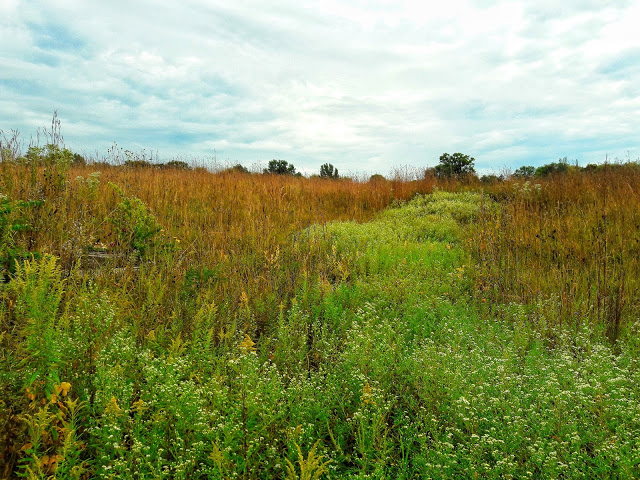
autumn colors 

both bright and dull 

an assignment 

Follow Dan's blog, "Gathering Wonder."

Your Kingdom Come--By a Worker in a Difficult Place

"Your Kingdom come, your will be done, on earth as it is in heaven." When we don't know how to pray, these words from our Lord’s prayer express our longing to see the glory of God fill the earth as the waters cover the sea.

My husband and I have lived and served in a few different countries—each with its unique beauty and unique brokenness. In each place, it has become more and more apparent that though God answers our prayers in different ways, the one prayer he always answers "yes" to is the heartfelt cry, "Give me Jesus."

In one country, it was difficult to keep a positive outlook when we looked out our window each day to the same trash, the same poverty and the same deeply ingrained societal problems. One day, as I visited a local orphanage, a young mother tearfully dropped off a small child, the youngest of eight. They could not feed all of their children and hoped that at least here, at the orphanage, their youngest child would have enough to eat.

I returned home completely disheartened by the severity of the needs around me and my own limitations as a mother of small children (what good would a bag of tangerines and a box of oatmeal cookies do in face of such great need?). Not knowing what else to do, I wrote down a prayer full of requests that seemed impossible unless the Lord were to intervene in a miraculous way.

I wrote, "Lord, I pray for M, who knows the truth but is wobbling on the fence. Please help her to sink her roots deep in you. Help her not to be drawn in to the lifestyle of her boyfriend (who, at the time, was in prison for dealing drugs)."

I continued to write. "Father, please help N's husband to be drawn to you. She loves you so much. And Lord, please help there to be a Christian school here, so some of these kids can grow up learning your ways. I prayed for an orphanage where they can hear about you from their very earliest days. And Father, please help some of these children to be adopted into Christian homes." And my list went on. Finally, when it was finished, I felt a bit better, folded up the paper and went on with our busy lives.

Ten years later, then living in another place, I came across that old prayer list, and realized to my amazement that each request had been answered in specific and tangible ways. There was a school and an orphanage there and several of those very orphans had been adopted into Christian families, some in locally and some abroad; M was working in another country among a minority population there, sharing the gospel; N's husband had come to Christ. Tears came to my eyes as I thanked God for answering every single one of those requests, each of which only God could have done.

It struck me then that most of the things that really matter—the salvation of a soul, the return of a prodigal are things only God can do. Sometimes we are blessed, as we were then, to see specific, positive answers to prayer. But sometimes he says no. Sometimes as sure as we are that God is able to bring the dead to life, we also live in a broken world with its reality that some pain might never go away this side of eternity. Whether it is chronic physical pain, a broken relationship, a discouraging brain scan or silence where we hoped to hear a heartbeat, in those instances we must depend even more on the promise that he will never leave us and one day will make all things right.

Currently, we live in a place where many people are anxious and fearful. We live in a place where followers of Christ are in prison. We also have the privilege to live alongside people from many countries, some who have trusted Jesus, and all from people groups we prayed for when our kids were small.

Every day, at least five times a day, I am reminder of why we are here, and we pray. We pray that people will be delivered from their bondage to fear, and experience God's perfect love in Jesus. We pray for believers in prison, that their hearts will be encouraged as they wait, and that the God who holds the hearts of kings in his hands will also put mercy in their hearts. Only God's perfect love can cast out the fear, lies and darkness that cause people in power to mistreat perceived enemies as they do.

There is one thing we can pray with confidence. In the final reckoning, God's justice will prevail, so we pray for his kingdom to come and set things right. Meanwhile, in the waiting, we thank him for his mercy, because there are still many, even many we know and love, who have not turned to him yet. And he is patient with us, "not wanting any to perish, but all to come to repentance."

In the waiting, God has taught me that although we may seem and certainly feel rather vulnerable and even powerless, Jesus has made a way for us to draw near to him. He gives us full access to the One who is over all, who knows our names and hears our prayers.

So we keep praying.

The Hidden Work of Beauty--Poetry by Lois Krogh

I lost a dear friend to cancer. There were only 40 days from diagnosis to her passing. There was no time for learning how to suffer or to say goodbye. But she had reservoirs of truth stored up in her heart from years of trusting and serving her Savior

Tis an amazing everyday occurrence--

a child is welcomed into the world

having for forty weeks lay hidden 

intricately woven and watched over by

the Worker of Wonders.

This common joy withheld from her,

while in her womb a dark secret hid for years.

Growing, twisting, devouring.

Now exposed and threatening.

Was this too His workmanship?

Alternatives are futile.

Hopelessness and terror

reside in a world where

even one cell divides

apart from 

His command.

A settled grounded-ness,

deeper than first responses,

is steadfastly fierce

in her who knows the truth:

His ways are wise.

Sovereign Worker of Your Will,

Hold her fast, keep her near,

in the darkness of this hour.

Bring to light the hidden work of beauty

You have crafted in her soul.

Walking Toward the Furnace by Wil Triggs

This week our small group looked at Daniel 3 and it was quite a time.

The lesson encouraged us to consider ourselves in light of King Nebuchadnezzar. This is something I have never really done. Nebuchadnezzar is the bad guy, the crazy guy, the anger–filled, worship–me pagan polytheistic despot. He’s inconsistent and a flip-flopper. I don’t like to consider how I might be like him. I’m not asking people to worship me, and I’m not throwing people into the fire.

To my surprise, the group didn’t have any problems identifying with him. In the discussion, people animatedly talked of the kind of structures we build for ourselves, how we want to be in control and worshiped (or at least obeyed) by those over whom we have control.

When we are confronted with someone who doesn’t go along with our ways, sometimes we get angry. Maybe it’s not seven-times-the-heat angry, but we aren’t welcoming to people who disagree, who dare to worship and think about God or church or life differently—perhaps even more rightly—than we do. Why don’t they do things our way? The way we want. Don’t they know that we know best Nebuchadnezzar’s judgment found them guilty, defiant lawbreakers who needed to be thrown into the fire.

I had never really considered myself to be a little Neb, so now, I stand corrected, and a little humbled, and not a little embarrassed at the smallness of the realms we hold on to.

Yet the real humility comes when I compare myself to Shadrach, Meshach and Abednego.

So then our talk turned toward the furnace, and how the three young people defiantly and steadfastly stood strong and walked toward the furnace. Those taking them to the furnace perished in the heat. That was one hot fire. Still, they walked to the furnace and stepped into it.

What we face is not the literal furnace fire that Shadrach, Meshach and Abednego faced. Instead, it’s the challenge of life itself answering the prayer of Jesus, “not that you take them out of the world but that you protect them from the evil one.” (John 17:15). To be steadfast and trust that God himself is protecting us along the way even when it doesn’t go our way.

And I think about how much easier, more organically me it is to stoke the furnace in judgment of those not like me than it is to step into the furnace of faith itself.

So then I think about people I know or know of who are in their own kind of furnaces.

How do Yousaf and Ruth stand firm? After enduring persecution in their homeland, moving here and now facing the mystery and pain of their daughter’s condition?

Or Ash and Katrina enduring the multiple surgeries of their young son?

Or Nancy who faced a surgery for her daughter and a devastating house fire at the very same time. (You can read that story here.)

What about pastors and other church leaders in Sudan who were arrested for not submitting to a government directive to hand over their churches to government control.

Then there’s Andrew Brunson who has been held in a Turkish prison for nearly a year and appears to be held as a bargaining chip by Turkey in their desire for the U. S. to extradite a Muslim cleric they don’t like who’s living in Pennsylvania. NPR reported the president of Turkey saying just a couple days ago, "You have a pastor, too. You give us that one and we'll work with our judiciary and give back yours."

How can it be that someone so devoted to the care of a people not his own is imprisoned and treated like chattel in some kind of global trade?

I know that God is sovereign, that none of this happens without his knowledge. We haven’t reached the end of the story. I believe that God’s power is made manifest in our weaknesses. When Nebuchadnezzar saw the miraculous preservation of the three young people in the fiery furnace, he saw himself and God in a new light. He was amazed.

How can people see God in such things? Somehow, I think it’s God doing stuff in us that we can’t possibly do ourselves that speaks in ways we can’t. 

So whatever paths we walk today, let’s pray for the fortitude to be faithful as we walk toward the furnace and look forward to when we emerge from it impossibly and miraculously unsinged.

The Fire Chief Blanched White by Nancy Tally

As I write, we are coming to the end of a September heat wave. The thermometer in the backyard has been reaching into the hundreds for the past few days though the official temps have only been in the 90s.

July 1983 was hot like this with temps hanging around 100 as I bent over blackened sodden masses of what was left of my family’s belongings. I couldn’t put it off till the cool hours of the evening because then there would be no light. Yes, no power for lights that would allow me to work in the cooler high 80 degree evenings and no power even for a fan in the daytime.

My task was to go systematically from one room to the next, and list the items that were no more. Nothing survived in the master bedroom. What remained of the curtains--curtains I had so lovingly sewn myself--hung by a few shreds having burnt from the top down. The heat was so intense by the ceiling that it ignited the curtains without the flames ever reaching them. The mobile on the twins' crib had melted. Still attached to the side of the crib, it was now a grotesque stretched out version of its former cute self. The mobile partly smeared its way down the outside of the crib and, on the inside, dripped onto the mattress ending in globular puddles of colors covered in soot.

I looked through the hole where the north window had been. The firemen knocked it out so they could toss my burning dresser and bookcase outside. They smashed to the ground below with an assortment of clothing, bedding, wall board, shoes, diapers, and whatever else was tossed on top like sprinkles on some over baked dessert.

My inspection was interrupted by the fire chief. He had come to apologize that they had not been able to open my windows and air the place out for me. I told him the windows had all been open. We argued about the veracity of my claim. He did not want it to be true. So I took him outside to show him where the billowing smoke left its marks above all the upstairs windows as it exited the house. I watched his face as his eyes widened with horror, he blanched white and nearly vomited on the lawn.

I knew nothing about the nature of fire, and had no comprehension of the emotions that had flooded him or why. As we stood on the lawn gazing up at the smoke stained house, he explained to me about fires and back drafts. The chief had entered the house during the blaze, measuring the temperature and assessing the danger to his men. It was hot, almost too hot, but seeing the windows closed he sent his men in thinking it was safe for them to try and save the house for us. The dark smoke had obscured the fact that I had left all the windows open a good two inches down from the top. The house had not been safe; it had been primed for a back draft. It was only God’s mercy that evening that the house did not explode and that those firemen came out alive.

The fire was designated as arson as we found three other places that day where the children who broke in had tried to set more fires to cover their tracks. I am grateful that none of the other attempts took hold. The heat from the one blaze in the master bedroom was enough to curl and melt the tiles off the bathroom wall on the far side of the house. Hot enough to crack the sounding board of my grandmother’s antique upright grand player piano which was downstairs.

No nothing was ever done to the children. Their father was on the city council. We lived in a known mafia town. The police refused to follow up on any of the leads we had, even though the kids bragged all over town about what they had done.

I did not pursue them because I had other fires to fight while this was going on. Daughter Becca was in ICU at Wylers Children’s Hospital, fighting for her life while I was loudly fighting with the resident over the fact that her shunt surgery (which took place the day before the fire) had failed to resolve the problem. Becca was not okay. Normally I would never have left Becca but Sharon had called and hysterically demanded that I must come home. Sharon was a cardiac ICU nurse and nothing phased her; I had to go. (It was six months later that I found out that Sharon thought my husband, Roland, was in the house and had succumbed to the smoke or the fire.)

To this day I don’t know how the surgeon ever tracked us down to the house where we had regrouped with our other children who had been scattered among our church families. But he did. After screaming at me for disappearing on him when I knew Becca’s surgery had failed, the surgeon accepted my verbal okay to start emergency surgery. He already had Becca prepped. She was critical and he was starting now. It was a few minutes before midnight. Doc H. said to get myself down there now to sign the papers before he got out of surgery. So there I was, headed back into the city at midnight the day after the house burned.

While I held my baby the next day after her surgery ,I groused about the old hymn “God Leads Us Along." The chorus says some through the waters, some through the flood, some through the fire, but all through the blood; some through great sorrow. . . . The song had it wrong! It said some through this and some through that--not one through it all so on I fussed. Then I came to where the lyrics had it right: but God gives a song, in the night season and all the day long.

Though I did not see this part I could always picture it in my head. I’ve written about the neighbor with the apple tree who lived two doors down. She became a part of God's song, because she was the one who saw the fire first, alerted the neighbors who lived in between our houses, grabbed their garden hose and trained the water on my bedroom window--all this before they knew what the ruckus was. She was in her late eighties. The other neighbor was a fireman by trade and took over her hose. That did not put an end to her efforts; she grabbed my garden hose and rejoined the fight till the fire trucks came and the guys again shoed her to the side. 

Some through the fire. Some through it all, but God gives a song, in the night season and all the day long.