As Mothers Love by Wallace Alcorn

My mother was, I suppose it could be put, an ordinary woman. She never graduated from high school (indeed, never allowed to do so), and she had no profession or trade or even what might have been considered an occupation—unless it was housewife and mother of two boys.

Her father wouldn’t allow her to attend the Milwaukee’s Girls Technical High School longer than what it took to learn to cook and sew, and then she had to go out and work until she had her own family to care for. (This did not, however, keep her from becoming the academic advocate for her younger sisters who did graduate.) She dropped out of the workforce to raise her boys and returned to help in the war effort, and then continued so she could pay her boys’ college tuitions.

Mom was ordinary in the sense of being-in-the-order-of motherness. One of her sisters told me, “Your mother is one bundle of love,” which is pretty good coming from a kid sister. 

  She was of a background where you restrained direct expressions of love to children lest they get big headed or become spoiled. You just love (active verb here), and they’ll know. But every now and then someone would tell me with understanding amusement that Mom would say, “I never graduated from high school, but both my sons are Ph.D.s!”

When I tried to tell her I loved her, she would give me a gentle shove and mutter, “Oh, go on now.”

She came to worry I had become a professional student and would never marry. Once, while ironing my shirts, she looked at me and said softly but most earnestly, “Wallace, I hope you marry a girl who will let me love her.”

Not, mind you: “whom I can love” or “who will love me”—but “who will let me love her.” That Mom would love whomever I marry was never an issue. This determined love was born within her about the time I was, and she nurtured it within for twenty-eight years until it finally burst out as confession, which I took as mandate precisely because I loved her. The least I could do was to present her with a daughter to love.

When I found Ann Carmichael, I arranged with a friend to buy rings and send them by air express to me in a Grand Rapids seminary. My father returned from work to find my mother packing an overnight bag, and he asked where she was going. Without pausing or looking up, she said, “To meet my new daughter.” She had scooped up the rings and was going to deliver them to me herself.

I asked Mom to stay out of sight long enough for me to put the engagement ring on Ann’s finger—and then present her to Mom as her new daughter. It was love, sight unseen and unquestioned. I didn’t meet Ann’s mum (like Ann, British-born) until after we were married, because she had left her parents in Ghana in order to finish high school in Florida. I later learned that she had assured her mum that I would be a good husband “because he is so sweet to his mother.” Of course.

The last time I saw Mom was in an Indiana hospital. Both our daughter and my nephew’s wife were expecting babies, and Mom had been looking forward to the arrivals of two great-grandchildren. But she knew this would be it.

With contented joy, she let go and said, “Tell the little ones I love them.”
Surprise Wedding, Garden Reception to Follow by Wil Triggs

It was the Soviet Union, when Ukraine and Russia were the same country, and Christianity was second class, or even worse. Foreign visitors to church were rare. Actually, visitors of any ilk were rare because going to church was, according to propaganda, backwards at best, ignorant and embarrassing.

So, I found myself in Ukraine, my first time in Odessa, well before Odessa Theological Seminary was permitted to exist as an institution of higher learning. People hand-copied the Bible or portions of it. The Christian faith could close doors on academic careers and careers in general. If you went too far, you could be sent to labor camps or admitted against your will to a psychiatric hospital. To believe in a god you could not see was crazy, irrational. The Soviets had documentation that Christians drank blood and sacrificed children.

To me, however, Ukraine was a sort of garden. Things grew there. The people were welcoming, friendly even. It was refreshingly agrarian.

On an earlier visit to Russia, when I expressed interest in visiting Ukraine, a Russian acquaintance shrugged me off. “Ukrainians are just silly,” she said. “There really isn’t a good translation for what I mean.” Don’t waste your time. Looking back, it seems like an eerie premonition of the war we call a conflict raging now under Vladimir Putin.

In the Soviet Union, going church was a highlight of any visit to either country. I still remember the people I met, the choirs, the long impassioned prayers, the recitation of poetry as part of worship, three or sometimes four sermons, including greetings from guests like me from America, women with scarves on their heads praying, weeping, praying more, men in buttoned suits and big ties, and eyes weary of manual labor jobs eating up their days; then trying to teach from the Bible with almost no training or resources.

We gave our greetings from our church and Christians in America. I probably mentioned College Church specifically.

As I looked out at the congregation, I saw in the front row, a young man in a suit sitting next to a young woman in what looked to be a wedding gown. They sat through the multi-sermon, multi-hour service. At the end of the service, the pastor called them to the pulpit. They both stood up with some friends and family, and they were married. A Russian-German man who was traveling with me explained afterwards that this was the way Christians married there. Instead of the focus of the marriage at a Soviet wedding palace, with flowers placed before a statue of Lenin after the ceremony, Christian weddings were part of church services.

The worship service that morning was closer the three hours than two. But the wedding part of the service was probably only ten or 15 minutes. After the service, the man who stood up with the groom (I guess they have “best man” tradition like us) came up and invited us to the wedding reception/party. He said that it would be an honor for them to have us with them at the celebration. We went. We ate amazing food the women of the church prepared. It felt like we became part of the wedding party. We were included in the wedding photos. We ate more. We gave them greetings and best wishes for their new life together. They told us that God had brought us there from across the globe to witness their wedding and be a part of the service. They had a special place for us to sit. We kept eating—the food never stopped. This went on for hours. And the cakes over there are so very different from ours.

At a certain point, I wandered away from the festivities and walked in a cherry orchard. The sweet cherries were hanging from the trees. I remembered trips to Cherry Valley (California) when I was a boy and eating all the cherries I could at the pick-your-own orchards. Suddenly, there I was with sweet, ripe cherries dangling from trees in Ukraine, and I couldn’t help but wonder at God. It was really amazing that he had brought me to this place.

The Christians there saw that truth better than I ever could. God brought us to the wedding, and that made us special people to them. I will likely never see the wedding couple again until heaven.

But I rejoice that wedding feast in Ukraine and the bride and groom and all of the wedding guests will join me at another wedding feast that the Lamb has prepared for us in heaven; a feast that as the bride of Christ we will enjoy forever with him. 

The Seed Sweep by Virginia Hughes

Seeds, wherefore art thou?

I harvested you last fall.

You were dried, and put into labeled envelopes for safekeeping. As I search the logical places; are you here? No, I can't find you. Jesus told a parable about a woman who looked for a lost coin. She swept the house until she found it. When she found it, she was so happy, she told everyone and had a party to celebrate. What jubilation in finding something important that was lost. The point of the parable is how much greater joy there is in the kingdom when one lost soul is found. Souls are obviously way more important than seeds. A much lesser point, yet practical, is maybe I should sweep my whole house if I'm going to ever find those seeds. Alright, let the sweeping begin.

Seeds, am I going to find you? 
You are of no use hidden away at planting time. Remember the guy who so proudly hid his talents to keep them safe, only to face an angry master who wasn't happy when his servant did nothing with those buried talents? Well, do not return to this home, master, because I can't even dig up a hidden talent right now. Instead I read about a date palm seed that germinated after being hidden for over two thousand years. Someone else claims to have germinated an even older seed. I don't want to wait, much less look for two thousand or thirty thousand years for lost seeds, but there’s always next year. I'm not giving up.

Seeds, where are you?
I care so much for you that I lost all track of you. It's embarrassing. I am nothing like the good shepherd finding the lost lamb and tucking the little love safely back into the fold. We relish the care of the good shepherd. I thought I kept you seeds closely tucked into my end table drawer, but you aren't there. I will keep looking.

Seeds, what’s the big deal?
I could buy any kind of seed nearly anywhere right now, but I don't want just any old seeds. I want my seeds. The zinnia seeds that grow three to four feet tall and branch out like small shrubs with giant flowers resembling small roses and dahlias in full bloom all summer. The smaller bright orange Lilliput zinnias named after the island of tiny people in “Gulliver’s Travels.”

Seeds, I am also missing . . .
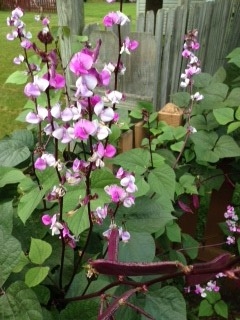
where are you, Hyacinth bean vine seeds? Tough looking beans as hard as pebbles, which must be soaked before planting. They send up heart shaped leaves on deep burgundy stems with exotic purple and white orchid shaped flowers. Within a few weeks, the vine rambles up a small fence or covers a castle’s walls in a fairytale. Their growth potential is intimidating with botanical intellect and primeval secrets growing straight up for Jack to climb the beanstalk. The purple bean pods hang in burnished bunches in the spectacular autumn sun.

Seeds, that feed us . . .
You endearing and delicious Box Car Willie tomato seeds with your cute and storied name. These are named either for homeless men who rode the train rails during the Great Depression, carrying these seeds around as gifts. Or, they are named for Box Car Willie, a country singer, who sang songs about trains, depending on whose story you believe. The tomatoes from these vintage seeds are bountiful, beautiful and full of heirloom flavor.

Seeds, are full of hope . . .
The smallest seed I ever planted was a poppy seed which looks like the period at the end of a sentence. Then I learned there are even smaller seeds. Certain orchids from the tropical rain forest produce the world's smallest seeds with one seed weighing one 35 millionth of an ounce. These seeds are dispersed into the air like minuscule dust particles, ultimately landing in the upper canopy of the rain forest where they attach to trees and get flecks of sunlight and humidity driven moisture enough to survive. Orchid seeds are smaller than a mustard seed, but remember the mustard seed was the measure for how much faith it takes to move mountains. We learn it's not the size of one’s faith but the power source the faith plugs into that makes all the difference. Mustard seeds float around in pickle jars if you want to see how little those are.

But what if you don't have seeds? Then what? What if there is no seed to plant? Ground won't stay bare unless it's blazing hot dessert sand with no rain, or steaming volcanic ash. Seed is wind-borne. It's dropped by birds and buried by squirrels and mice, and other critters. There are all sorts of seeds, but they aren't all worthy of your time. It's wise to be selective. I want to plant beneficial seed that is watched, watered and tended in my garden and in my life.

Seeds, are worth looking for. . .
Their existence proves there is something that came before the seed. Or better, someone, who created all things including seed bearing plants. So, I'm praying to the someone who knows where I stored my seeds. While I look for my lost seeds, I pray that the Lord will help me find them.

Seeds we can't lose . . .
These are the prayers we plant in our lives today, right now, when we talk to God about everything. He prompts us to care for each other. Call a friend. Open a door. Walk with a neighbor. Practice forgiveness. Listen to a lonely voice. Read the Bible. Provide a ride to someone who cannot drive. Share a meal. Smile.

And I'll keep looking for my seeds as I sweep my house clean.

Update from Virginia: Lost seeds found. I just found my missing seeds in the bottom of a drawer, turned over with other envelopes placed on top of them. WhenI emptied the drawer, I wondered, "Why are these envelopes in here all haphazardly?" I didn't think they were my seeds at all. I reached in to straighten out the envelopes I figured were empty. Then the most welcome sound of seeds shifting met my ears. They are labeled and accounted for.  lifted out one after another of the envelopes and felt a rush of relief and gladness.

Be Strange by Lorraine Triggs

My mother delighted my sisters and me with her creative spin on the English language. By far, the expression we loved the best and repeated the most was "Shut the rain, the windows are coming in." She would shout this to us whenever a summer storm blew in. We dutiful daughters would then run through the house and close the windows.

The runner-up to "shut the rain, the windows are coming in" happened one evening as we said good-bye to company who had come for dinner. At my mother's house, guests neither arrived nor departed without a fuss being made over them, and that evening was no different. As our family friends walked down the front walk, my mother called out, "Be strange!" (a rather loose translation of "Don't be a stranger.")

For weeks on end, her dutiful daughters repeated to each other, "Be strange," as if any of us needed encouragement in that direction. 

Actually, my mother had no idea that she had uttered a profound biblical truth. She didn't have time for heady talk about a Scripture passage. If the Word said to practice hospitality, then she would do just that. It didn't matter who you were or what you did for a living, the door to our home was open. In retrospect, I am sure we entertained angels disguised as strangers.

That brings us back to the profound truth that as followers of Jesus we are strangers in this world, but we don't treat other people as strangers. We love them. And that's strange, especially in our insular society and partisan world.

Our band of followers includes the likes of Abraham, Isaac and Jacob who "acknowledged that that they were strangers and exiles on earth" (see Hebrews 11:13) and being strangers who didn't realize that they were paid an amazing compliment, "of whom the world was not worthy." (Hebrews 11:38)

The Apostles and church fathers didn't have time to squawk about first ammendment rights or call a center for law and justice to defend them. Those things didn't exist back then. They were preoccuppied with faithfully following Jesus, taking the gospel to all nations, ending up hiding in caves or being sawed in two, telling a jailer about Jesus or praying to be faithful when they faced the jaws of a lion or a gladiator's sword. 

We are a "peculiar people." (1 Peter 2:9, KJV) We are not a voting bloc or cultural movement or naysayers. We are more than that. We are followers of Jesus, who had "nowhere to lay his head." We are strangers en route to a better country.

So to quote my mother who has been in that better country for a few years, "Be strange."

A Servant of the High Priest by Wil Triggs

Inspired by Jeese Meekins' message at Men's Gathering on April 7, here is a post-Easter musing I wrote of what might have happened to Malchus, after his encounter with Jesus in the garden and those post-Resurrection weeks, years even, that followed...

When his grandfather came into view, Janek dropped the olive branch he was playing with and ran to greet him. “Grandpa!” he exclaimed.

Malchus caught him in his arms and pulled him up to hug him. Little Lenka, too, joined them with a circle dance of joy around them. It did Malchus’ heart good to see his son’s son and daughter.

Yatniel heard his son and daughter greeting his father before he saw them. His and Malchus’ eyes locked on one another, a mix of surprise, familiar memories, rifts of the past, joys, sorrows, all there in an instant.

These visits were not common and often unexpected. There was never really any way to know when Malchus would be freed from service with enough time for the journey and visit.

Malchus’s son and the children’s father, Yatniel was a challenge and a sort of heartache for Malchus, but a good Roman son (and Yatniel was certainly that if he were anything) would never close the door to his father. It would be a shame to do so.

So here they all were—three generations together for a meal and time together. 

It was a holiday whenever Malchus appeared. They washed, ate, reclined. It was a welcome moment of rest. 

Until Janek begged to hear the story again. It happened every time he came.

Yatniel wanted to stop him. He hated this, but he also could not deny his children this rare time with their grandfather, so Malchus would tell his story, again . . .

We came to the garden—the priests, their servants, the military, enough of us to wage a little war. There was a lot of anger, hatred even, and when we got there, only a handful of people were in the garden. What was all this—so outnumbered were the band of people there. It was baffling really.

One of us stepped forward, embraced, kissed even, the one who had been kneeling and apart from the others. Some of the military guards advanced but stopped. There was some talk and then all of us fell down.

I was right there in the middle of it with my master.

We stood up and there was a small commotion. It happened quickly. One of his band drew a blade but instead of hitting his target, in the heat and darkness of the night and the moment, he struck me.

It was a single act followed by silence. Even I did not cry out, but my ear, the blood, the pain. It did hurt. It felt like water flowing into my head, but it was blood, my own blood and it was everywhere. I could not hear from that side of my throbbing head. I clutched where my ear had been and tried to stay the flow.

With all the men in our little army, no one responded with a weapon; no one in fact did anything. If it had been the high priest, there would surely have been an intervention, but since it was only his servant, nothing happened. The only one to respond was the one who had been kissed. He came to me, held my ear in his hand, and instantly made it right. The bleeding stopped as did the pain. I could hear better than ever before.

This was not the last time I would see him, but it was the last time I saw him before he died.

Yatniel held his tongue. There weren’t very many people left who were alive back then, Yatniel told himself. His father was one of the last. Some had moved away, or run away, but time passed. Soon, they would be gone. 

These others who had begun to follow the sect, surely they would die out. The stories would slow to a trickle or evolve into fables, and that would be the end of it.

Lenka was young, maybe too young to understand, but just starting to grasp the wonder of it. 

Janek did not want his father to know, but a fire was beginning to burn in his heart, burning and warming at once, whenever Malchus got to what came next—the next time Grandpa saw Jesus, after he had died. It meant that Grandpa would see him yet again and next time, everything would be healed—everything, not just an ear.

Soon it would be time to go. Janek and Lenka threw their arms around Malchus. Janek reached up to his Grandpa’s ear to touch the reality of it all. His finger traced the path of the scar from bottom to top, perfectly healed, but still there, a mark for all to see as long as Malchus walked this earth.

Easter Road--poetry by Anita Deyneka

Simon the Cyrene,
only passing by.
Little did he dream
he would carry Jesus' cross
to Golgotha's grisly scene.

A crown of thorns.
Soldiers mocked, scorned
until Jesus' last breath.
Earth shook and darkness fell.
The temple curtain tore.
And they knew
this was no ordinary death.

Two criminals watched him
nailed to a cross.
They saw the soldiers
gamble for his clothes,
taunt his thirst with sour wine
and hang the sign,
"Jesus King of the Jews."
Only one knew
it was true
and wanted to be at Jesus' side
in Paradise.

Joseph of Arimathea,
soul-stabbed by Jesus' wounds
How could he help?
What could he do?
He gave his tomb.

The women came
in grief and pain
to embalm.
The angel said,
"He is not here.
He is risen from the dead."
The women fled.
What else would they do?
Who had ever heard such words said.
But they were true.

Beholding Glory poetry by Lois Krogh

They didn’t come
to see him die.
They came to see a miracle.

Drawn by a desperate curiosity,
moved by a perplexing need,
they quietly hoped
what their leaders scoffed,
“He saved others.
Let him save himself.”

They left
filled with deep sorrow
from all they had seen.

Hearts heavy.
Thoughts darkened.
Eyes blinded
to the dazzling drama.

The apex of history.
The culmination of prophecy.
The reconciliation of God and mankind.

Days, weeks, years later
some would come to know
and wonder at the glory
they’d been privileged to behold.

Open my eyes that I may see
truth in the midst of deception,
grace in the midst of despair,
beauty in the midst of destruction. 

Dusty, Fusty Feet by Virginia Hughes

Feet aren't easily washed. They need to be soaked, scrubbed and scraped even. The washer must bend a low bow or better squat as feet aren't cleaned just with a bucket of water thrown in their general direction. Suds, perfumes and sturdy towels help. This is the kind of chore a parent performs for the health of his little one. It covers the intimacy of lovers and at times the expediency of health care professionals. For the latter, I'm not going in without a hazmat suit covering toe to top of head.

Yet Jesus washed the feet of his own men at a time of filthy, open-toed footwear in the dusty Middle East. During the Passover feast, Jesus begins the foot washing. The dramatic scenes unfold one after another. Betrayal, garden arrest, betrayal, trial, betrayal, betrayal, betrayal. He washes their feet before he lays down his life. He cleanses them on the outside as he blazes a trail to purify the inner person.

At cross purposes since the Fall, Jesus is always teaching his followers. Conversation and contemplation fill the air between them as they hike the dusty roads. A fig tree withers before their eyes for one lesson. Jesus turns water into wine and saves the best for last. No one else would think of that. He collects people as their fishing nets explode with fish. He sleeps through a storm, tells the wind and waves to be still, walks on water, feeds the five thousand, plus more. He calls a dead friend back to life, heals a blind man and restores strong legs to another. He performs so many miracles they aren't all listed in the Scriptures.

These men who follow Jesus have seen a lot. Yet he finds one more way to unnerve them with his unexpected lesson of foot washing. They are awkward watching Jesus be so humble. The lowliness of the scene echoes that of his manger birth, and foretells how lowly he will yet become. They struggle not to get in his way as he teaches them how to serve each other. “Not my feet,” Peter pleas. “Yes, if you don’t let me do this, you will have no part of me.” Jesus says. “Wash all of me then,” Peter bends. What a refreshing relief to lose the layers of grime. Peter has no idea the layers of grime Jesus is pursuing.

As the night unfolds, the risks increase. The stakes get higher. At the fever pitch of torture and death, Jesus teaches by example again. His body is broken as he dies for all sin and fulfills his earlier words about greater love. Greater love has no man than to lay down his life for his friends. His blood flows to wash us clean.

We see spring wash the earth with rain and new growth emerges. We eat the bread and drink the wine and remember Christ’s sacrifice for us. This time of new lambs and resurrection glory brings opportunities to love our neighbor as ourselves. We keep his commandments when we love each other, and the strength to do so comes when I ask Jesus to wash all of me then.