Saturday Walk by Wil Triggs

As I begin this Saturday, it means walking the dog and drinking coffee. This is the same almost every day. It’s also listening to the Bible readings for the day. It’s wondering how the strawberries in the produce aisle will look, and how much they will cost this week.
 
Early in the pandemic, I went into a store with my son. It was a Saturday errand. He wanted to buy some deodorant. It was close enough to home we could’ve walked, but we didn’t. We drove.
 
What about this one? I asked.

I don’t know what that one smells like, he said.
 
I pulled off the cap and held it over for him to smell.
 
“Oh, no!” a salesperson from store approached us and snatched the product out of my hand. “You ruined it. We aren’t allowing anyone to do that right now.”

“Do what?” I asked.
 
“You aren’t supposed to open and smell things like that. You should bring it to us.”
 
But you can’t smell it for us, I thought but didn’t say.
 
There were no signs posted. We weren’t going to use the product, just smell it. How were we supposed to know that?
 
No smelling allowed.
 
We left a little embarrassed, a little angry, confused.
 
Remember when touch was a good thing? In some ways, it still is. I was thinking about that around the same time as the smelling incident, how overnight I seemed to have lost permission to shake the hand of another person. Hand-to-hand contact was out of the question because of concerns about spreading the virus.
 
But there’s research that physical human contact has many benefits. It seems to have the ability to lower blood pressure, lower heart rate, lessen depression and anxiety, boost the immune system. One article published in Psychology Today commented that  “It’s ironic that during a highly contagious pandemic where our immune systems are being the most stressed, we are being deprived of something (human touch) that is so essential to its function.”
 
I supposed I'm far enough away from those incidents that I can write about them now.

Modern life changes what is acceptable. One area of research can call something good. Another can say it’s life-threatening. And somehow both might be true at the same time.
 
The examples come from COVID and the physical self, but what about our souls and fallen life and our modern world?
 
Are we losing our ability to taste and see that the Lord is good? Are we trading down moment by moment, day by day?
 
There is a longing in our souls to be with God.
 
Even for unbelievers with no faith, the longing echoes from Creator to created one. Walk with me. We don’t have to put the longing there. God already did that. All the unbelieving people around us, who seem just like us in so many ways, it’s inside of them, too, even though they probably don’t know it yet.
 
Walk with me.
 
We resist. I’m too busy. My to-do list is long today. I’m under the weather. I have to get ready for the party. There’s too much hurt in me, too much sin, too much pain. I must bury my dead.
 
The real problem is my environment. I need a new house. Maybe a new state or even a new country. At the very least a new car. This Jesus thing, it’s just too much. I don’t know.
 
I’m just so tired.
 
Walk with me.
 
A few weeks back, our Bible lesson with the kids was about rebuilding the wall. How great it was with everyone working together in harmony. And when it was done, what great celebration.
 
“Have you ever moved into a new home?” I asked the children and was surprised by the number of hands that went up.  “I mean a brand-new home, no one had ever lived in it before you?” A few of the hands went down. Then I asked them, “Did that new house, as great as it was, make you sin less?” In unison the kids all said “no.” Simple question.
 
What about our stuff? The toys and things we love—do they make us holy? Do we sin less because we have them?
 
Another unison “no” and then one honest boy added, “No, but they sure do make me happy.”
 
Material happiness, though, doesn’t smell or taste as good as it seems, at least, not over time. And when we let that stuff take over, we lose the most important things of all.
 
When we wouldn’t walk with God, he decided to walk with us.
 
Walk with me.
 
We should be trading up, not down. In his Word and by his Spirit, God calls us to touch, to smell, to taste that he is good. One of Jesus' disciples wrote that "which we have heard, which we have seen with our eyes, which we looked upon and have touched with our hands, concerning,"--and this is what is astounding, the writer didn't write "concerning Jesus," he wrote "concerning the word of life." (1 John 1:1)
 
The Word of life who came to us and told us things. He did things no one else could or would do.

I am the bread of life.
I am the light of the world.
I am the door of the sheep.
I am the good shepherd.
I am the resurrection and the life.
I am the way, the truth and the life.
I am the true vine.
 
This is the person. The One. He is closer than we can imagine. Waiting.

Walk with me.

So, go ahead and eat the strawberry. Drink the coffee. Live your day. But also see the nail marks in his hand. Serve the people. Put your finger where the nails were. Love the people. Put your hand into his side. Tell the people. Give yourself away. Believe.
 
Praise God that we can walk with him today. 

A Morning Prayer

Today's musing is from A Pastor Prays for His People by Wendell C. Hawley.

Lord of power, Lord of grace,
All hearts are in your hands, all events are of your sovereign will.
You alone do all things well.
Sometimes we don’t think all is well.
We pray for the change of hearts in others,
but maybe it is our own hearts that need your transforming power!
Perhaps the failures we condemn in others are really our own failures.
Perhaps situations are distorted because of the log in our own eye
even as we complain about the speck in another’s eye.

If this be the case, help us to focus on what you want to teach us . . .
the changes needed in our hearts.
Convicted by your Holy Spirit,
enlightened by your holy Word,
enabled by your powerful presence,
assured by your matchless grace,
I confess my sins, my failures, my foolish independence, my lovelessness,
believing that
If we confess our sins, you are faithful and just to forgive us our sins and cleanse us from all unrighteousness.
Thank you, God, for complete forgiveness.

Now I pray honestly and earnestly, God of great power: Control my tongue.
Keep me from saying things that make trouble,
from involving myself in arguments,
that only make bad situations worse,
only cause further alienation,
and make me think everyone else is at fault except me.

Control my thoughts.
Shut the door of my mind against all envious and jealous thoughts.
Shut the door of my mind against all bitter and resentful thoughts.
Shut the door of my mind against all ugly and unclean thoughts.
Help me to live in purity and in love.
Henceforth, may my focus be on the completion of your work—your good work—in my soul.
Then, Good Shepherd, I shall not be ashamed in the day of Jesus Christ.

Amen.

Trails by Marr Miller

Photographs for this month’s word: TRAIL

Greg Schmidt’s footprint on the beach (Mediterranean) in Tel Aviv, Israel.

Family on a hiking trail in Weowna Park above Lake Sammamish, Bellevue, Washington.

A deer hiking the Tipsoo Lake trail, East of Mt. Rainier, Washington.

Decisions, shadows on the McKee Marsh trail, Blackwell Forest Preserve, DuPage County, IL.

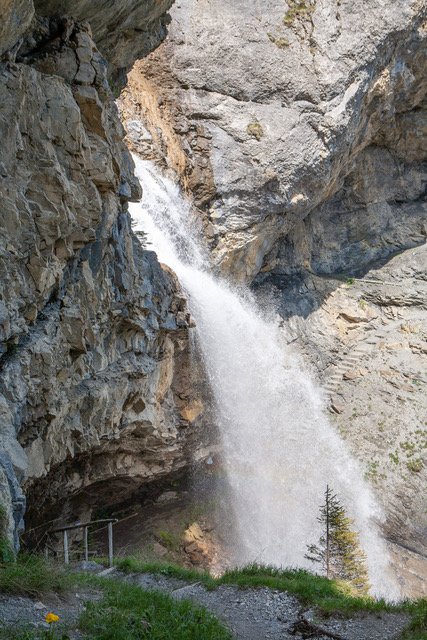
Hiking trail under the Sprutz, Upper Lauterbrunnen Valley, Switzerland.

Upward and onward, Mt. Rainier, Washington, above Paradise.

Bagley Lakes trail and the Heather Meadows, Mt. Baker, Washington.

A Doxology Psalm

Today's Musing comes out of this week's ArtSpace workshop. Participants included teenagers to those in their seventies. Thanks to each of them for their worshipful contributions to this psalm in three parts. We asked everyone to consider the Trinity through metaphor and simile. Consider these, a sampling from the evening, first draft thoughts and images of the God who loves us. 

God the Father
The beginning, always, infinity, reality, light, present.
God is like a firm rock foundation, a perfect just judge, the best friend.
God forgives our sins like a person who is in debt to the master and the master forgives him.
God the Father is like a skyscraper, shining in the sun.
Love, our Creator, Protector, Potter, the strong yet gentle One.
A house that gives us refuge and shelters us from storms.
God the Father is like a fresh-flowing stream.
The Commander, sends forth his word, hosts of heaven,
The Father is like the sun covering his children with warm light that makes the flowers burst from the earth even through snow.
He sees like an eagle and a mouse inside our hearts.
True North,
The master gardener.
Weaver of a stunning tapestry, the universal manager,
The Artist, the Playwright, the Sculptor,
Vast pillar of stone, Canopy of the sky.
 
God the Son
The calm after the storm
Like a David Austin rose, splendor in its beauty
Friend, Life Preserver, Lifeline, Mirror,
Jewel, Strength, Advocate, Defender
The storied warrior, slain in battle, comes home victorious.
A fruitful vine, like a brother
Teacher, firm yet encouraging, showing his love.
Truth, our rescuer.
Jesus is a whirlpool, pulling everything into his dominion.
The hero who rescued me, the glue that holds all things together, the road and the destination.
A desert oasis, a mighty oak, beloved one.
Jesus is like a dog; He walks with us and is always there for us. Faithful.
A protecting brother, our defense attorney, our umbrella from God’s wrath,
The bridge across the bottomless pit of sin to God the Father,
The perfect sacrifice, the creator of earth come to the ruined world; the never-sinner.
The One who hears all who call.
 
God the Holy Spirit
Healer,
Consuming fire, voice of God, like a wind, like a dove.
A whirlwind all around us.
The Holy Spirit is like the snow that blows from the church steeple, softening the deepness of night in his blanket of white.
My helper. A constant companion showing me the way.
An eternal flame, like a piercing beam of light.
Water, breath and wonder.
A rainstorm that refreshes and gives us new energy to persevere.
All-directions wind,
Uplifting breath,
Cleansing, rushing waterfall,
The wind, the white noise to which I fall asleep.
Our stronghold in seemingly empty and void places.
The Holy Spirit whispers in our heart and tells us what we need to do.
The Holy Spirit helps us to overcome the temptations of Satan, sin and this world.
Full of surprises. Intense joyl
He listens to everything we say and turns it into a song that he sings to the Father.
 
Praise God from whom all blessings flow;
Praise him all creatures here below;
Praise him above, ye heav’nly host;
Praise Father, Son, and Holy Ghost.

The Theology of Grammar by Lorraine Triggs

As a child, I had a concrete grasp of a story’s viewpoint. First person – that’s me, second person is you, and third person are those other people over there. Obviously, a first-person story was more entertaining and superior to a second- or third-person story, because of its subject matter.

Fortunately, my understanding of viewpoint matured as I gained experience in writing and editing and in reading my trusty bibles—The Chicago Manual of Style and The Christian Writer’s Manual of Style. I highlight sections in the style and usage section. I memorize rules about time constructions and capitalization and hyphenation. (Including this capitalization rule from The Christian Writer’s Manual of Style: “Capitalize the word Bible except for those instances when it is used metaphorically, as in The Audubon guide is the bird lover’s bible.")

At least I think I’ve matured in my child's understanding of viewpoint, and then I open the Bible, which is no metaphorical bible, but God-breathed words that reveal the Word made flesh, not a metaphor but very God of very God.

The fourth stanza of American writer John Updike’s poem “Seven Stanzas at Easter,” reads:
Let us not mock God with metaphor,
Analogy, sidestepping, transcendence,
Making of the event a parable, a sign painted in the faded
Credulity of earlier ages:
Let us walk through the door.


Gospel writer John defines the door in John 10:9, where Jesus said, “I am the door. If anyone enters by me, he will be saved and will go in and out and find pasture.” The resurrection is not a metaphor; it really happened. Jesus is the real door; I get that.

What trips me up is the word anyone. Those third person others standing over there may enter the same door that you and I do, be saved, and go in and out and find pasture. And through my myopic first-person lens, I already have the pasture picked out for them, the grass might not be as verdant as mine, but no bother, it's still a pasture.

But I have walked through the door, and that egocentric first-person viewpoint should bother me. A lot. Jesus’ invitations to come, to go in and out and find pasture, to rise up and walk are for me, you, and the others over there. Jesus preached peace to the far off and to those who were near, and reconciled both to God, eliminating the distinctions between our human viewpoints.

After all, there is only one first-person viewpoint.

God said to Moses, “I am who I am.” And he said, “Say this to the people of Israel: ‘I am has sent me to you.’” (Exodus 3:14)

What Happens to Nate Saint? By Wil Triggs

“Have you understood all these things?” They said to him, “Yes.” (Matthew 13:51)
 
In Kindergarten Bible school this weekend, the kids will find out what happened to Nate Saint. I’m doing a two-week missionary story on him. Last Sunday they heard about his life growing up, his love for planes, his invention to drop cargo from large canisters on the wings of the small planes he flew. And then the tentative and cautious contacts with the Auca people. Last week’s story ends in joy, as some of the Aucas receive gifts that kids could relate to—yo-yos, balloons and other toys. Relations between the small band of missionaries and the native tribe seem to be moving forward toward friendship.
 
The children wanted to know what happened next. I think some of them think they know—the Aucas will one by one trust Jesus and the missionaries and the Aucas will live together happily ever after.
 
I know what happens next and they’re about to find out. The end of the story isn’t just that Nate Saint dies, but that afterwards people come to faith. Many others, inspired by the sacrifice of these missionaries, enter missionary service themselves. What happens next is that Nate Saint is killed.
 
I am hesitant, though, and don’t want to tell the kids about the dying part. They seemed content with the story going well. They seemed happy to hear the good stuff. What happens next is sad and scary and wrong. I want to shield them, somehow, from the hard section of the story that seems not right.
 
This is not unlike Jesus dying on the cross. It’s terrible. The disciples go into hiding. Imagine all that was going on in Peter’s mind with his betrayal and Jesus’ arrest and death, and Jesus’ words about resurrection and life running through his mind along with images of Lazarus walking out of a tomb. Peter and the other disciples didn’t reassure each other with “Sunday’s coming,” I don’t think. They had to be besides themselves in grief and shock and wondering what to do next. Death and atonement had to come before resurrection and the Spirit to overcome sin.
 
I have been a Bible school teacher for most of my adult life. I’ve seen that shielding impulse repeated in a lot of curricula through the years. We easily skip over the hard parts. Most of the time it’s not the end of the story, but somewhere in the middle where things move into the shadows.
 
Joseph sold into slavery. The famines that drove his brothers to Egypt to ask for help. Elijah running for his life after he defeated the prophets of Baal. The prophets spoke to people who wouldn’t listen. Four hundred years of silence. Simeon waiting almost his whole life for that one day. The slaughter of the innocents. The martyrdom of Stephen, which is the end of him but the beginning of the church. The apostles sharing the good news and Christ using them in amazing ways before most faced deaths like what Jesus faced.
 
Being a Christian isn’t for wimps, but oftentimes, I feel like a wimp. I am not always ready to face that hard stuff or to tell little ones about it. And there’s something there, too, about perseverance—staying true to him on Wednesday, the traditional hump day of the week, or the errands of Saturday, Sunday after church and before the real first day of the week. Our small group is reading a book where the author says his family has “Tongue-Torched Thursdays,” when their not-so-tamed tongues lash out at one another. Our lives are filled with ordinary days where not much happens. Those are the days where the rubber meets the road. Probably for most of us, today is one of those days. This is the middle of the story, too. Not much is happening and yet everything is happening.
 
The story needs to get hard to be a good story, and we are in the midst of the best story ever. We are part of it. No, we don’t hide the hard stuff. It’s difficult for us to do it justice for our kids or for ourselves. We were wandering around the wilderness with our Kindergarteners for what seems like an eternity, it was really just a few weeks—not even a year, let alone forty, with an entire generation of people dying off before they could cross the Jordan River.
 
God is more patient and long-suffering than we are in the middle our own series of stories. He’s always faithful—with us in the middle days of ordinary life and ever-present with us in the hardest days ever.
 
We look back, but we also look ahead. As we celebrate the Lord’s Table this Sunday, let’s examine ourselves and consider the cup that Jesus drank for us. Let us also look ahead to the day when we are all together celebrating at the marriage table, the end of the story as the beginning of something altogether new.

Death to Clichés by Lorraine Triggs

“What do you mean Paul Bunyan didn’t carve out the Great Lakes?” I shouted at a science show on the Smithsonian Channel we were watching the other day. “I can’t believe it. Everyone knows he did.” The show asserted some other method that had to do with time and ice. Just like everyone knows that Johnny Appleseed planted all the apple trees in America, and George Washington never told a lie.

My thoughtful husband replied, “Calm down. We all know it’s true, but the Smithsonian has its reputation to think about.”

As a child who believed in Santa long past the acceptable age, I still have that tendency to hang on to stories and myths—now morphed into clichés and truisms—as a way of explaining the unexplainable, that Paul Bunyan thing notwithstanding. Folklore can be a beautiful thing.

Christianity has its own folklore in the form of heroic truths of the past repeated so many times that we begin to think these little proverbs (not from Proverbs) are actually Christian truths. Matt Smethurst (guest speaker at the Community Sunday of the Fall Missions Festival) posted an article on The Gospel Coalition site back in 2017 titled, “5 Christian Clichés that Need to Die.” Here are Matt's top five:

  • When God closes a door, he opens a window.

  • You’re never more safe than when you’re in God’s will.

  • Let go and let God.

  • God will not give you more than you can handle.

  • God helps those who help themselves.

Apparently, these clichés are experiencing a slow death. But not slow enough for Matt or for me.

Take the first cliché. I don't think God is running around closing doors and opening windows when we pray. I’d rather share “open window” answers to prayer than, sigh, no, God hasn't answered that prayer. But God hears the sighs of how long, Lord, how long, and he answers, don't be anxious. Look out that open window to the birds of the air. Seek me.

The third cliché on Matt's list is the opposite of what God wants us to do. Instead of letting go, we are to hold fast and cling to him. Run to him for refuge and hide under his wings. Trust him and do good no matter what. Perseverance is not letting go.

The second and fourth clichés go together for me. Never more safe than when you’re in God’s will? That one would be a hard sell for believers in Nigeria, North Korea, Indonesia, Somalia or Myanmar. And, sorry to disappoint, but God will give you more than you can handle. “Dear friends,” wrote The Apostle Peter, “don’t be surprised at the fiery trials you are going through, as if something strange were happening to you.” (1 Peter 4:12, NLT)

That last cliché? Help comes from Jesus for the utterly helpless and hopeless. Consider one Scripture passage: Romans 5:6-8. For while we were still weak, at the right time Christ died for the ungodly. For one will scarcely die for a righteous person—though perhaps for a good person one would dare even to die—but God shows his love for us in that while we were still sinners, Christ died for us.

Like legends, these Christian clichés try to explain the unexplainable whether it’s unanswered prayer or suffering or God himself. We want to be in the know, the ones in charge, but we're not. Once we stop trying to explain how we think God should work, we will be awestruck that the Lord, seated on high, looks far down on earth, and “raises the poor from the dust and lifts the needy from the ash heap.” (Psalm 113:6-7) 

I once researched Johnny Appleseed for an article I wrote for a children’s magazine. The real Johnny Appleseed was a man named John Chapman, who planted apple orchards as he traveled from Pennsylvania to Indiana. He was also a businessman and missionary who helped make peace between native Americans and white settlers.

Sometimes the real person is better than the legend. And the one true God is better than all we can think or imagine or squeeze into a cliché.

From A Pastor Prays for His People by Wendell C. Hawley

Almighty and everlasting God,
Who numbers the stars in order and turns darkness into light,
you have set eternity within the heart of man.
We think about eternity and trust you.
Your promises are written in our hearts . . . we believe them.
What no eye has seen, nor ear heard,
And what has not entered into the heart of man . . . 
You have prepared for those who love you.
The credo of others may be,
Let us eat and drink, for tomorrow we die!
But for us of the transformed heart,
We seek a city whose builder and maker is God.

Thanks be to God . . . 
You are light to the wanderer,
joy of the pilgrim,
refuge of the brokenhearted,
deliverer of the oppressed,
strength of the perishing,
hope of the dying,
Savior of sinners.
We long to hear that voice from heaven saying,
"The kingdom of this world is become the kingdom of our Lord, and of his Christ, and he shall reign for ever and ever."
Praise be unto God.

Father God, the world presses in upon us every waking hour.
We are squeezed and pulled and rudely affected by a system contrary to the way of the Cross.
Consequently, we are shocked to realize how subtly the world's approval,
language,
conduct,
attitude
seeps into our life.
Help us remember that Vanity Fair is not our home; we are just passing through.
We are soujourners. . . just a breath away from our eternal home.

Keep us unencumbered lest our goods become our gods, and our cares, cankers.

And now, Father God, give ear to each penitential prayer as we ask for forgiveness and grace.

Thank you for clean hearts and revived spirits.