The Next Step

Sometimes persevering is simply taking the next step. February's seminar on caring for the orphan offered a wealth of resources to help you take that one step forward in caring for the vulnerable. Again, thanks to the Culture Impact Committee of College Church for putting together this seminar.

Light and Beauty

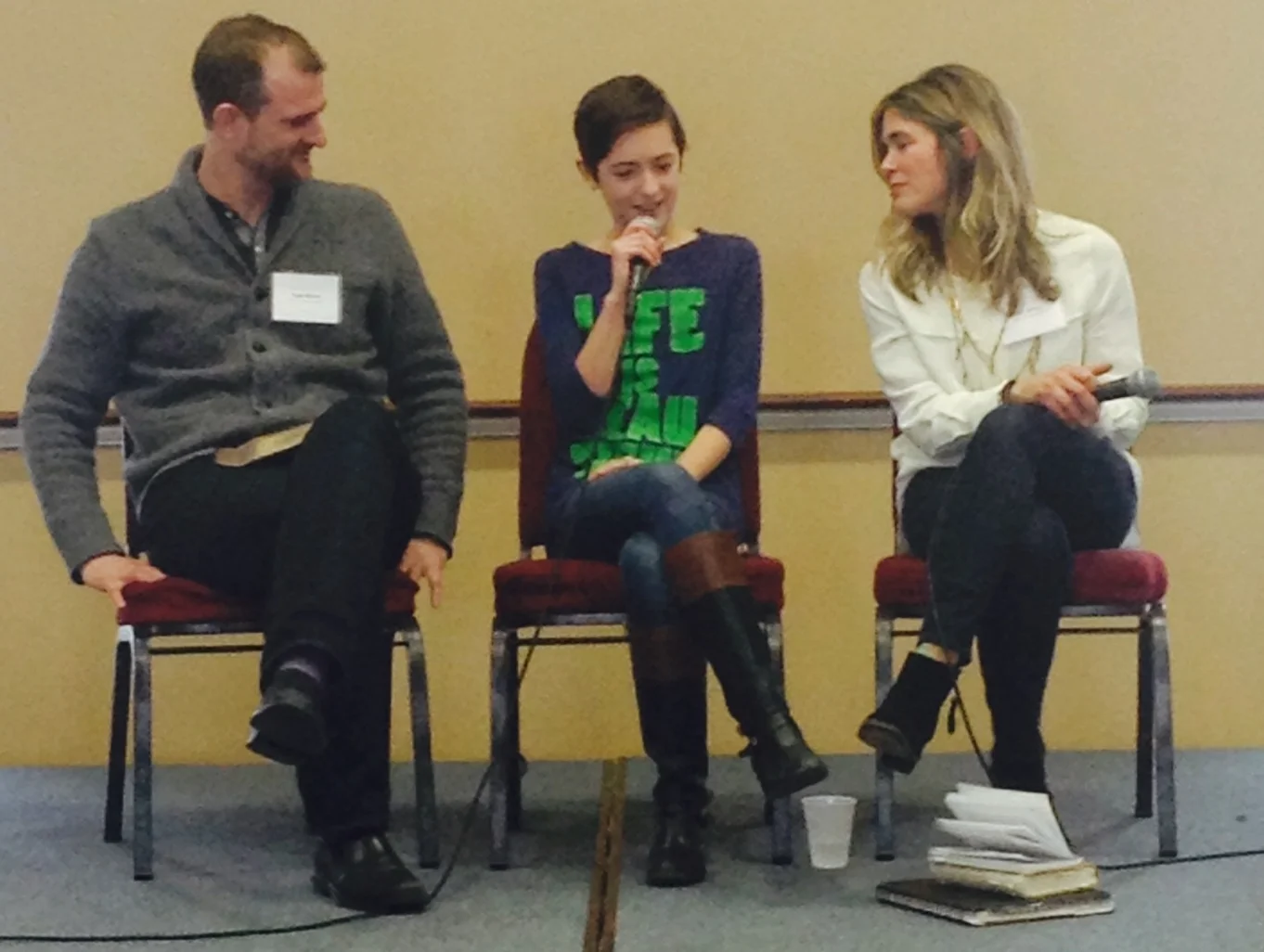
Before we list resources, read the short message eleven-year-old Ela Parker shared at the seminar that captures the light and beauty of adoption.

Whenever I hear the word "adoption," it means family to me. You have a new family when you get adopted. To me, adoption has two meanings:

1. To be adopted into God's family in heaven and to be with him forever in his presence. he is our Father in heaven. He loves us so much.

2. Another meaning adoption has for me is parents and siblings. More than just family and siblings . . . it's a family that cares who you are and they want to help you. they love you no matter what, even if you have a disability or something wrong with you. they still love you just as God loves you. they don't judge you the way other people might. They see light in you and beauty. God loves us so much he made each of us different in a good way.

This is what adoption means to me.

Ela Faith Parker (daughter of Mike and Sasha Parker)

IMG_0419.JPG

The Culture Impact Committee put together a list of books and websites to help you in this journey of caring for the orphans.

Books

  • Adopted for Life: The Priority of Adoption for Christian Families & Churches by Russell D. Moore
  • Becoming Home by Jedd Medefind
  • Orphanology: Awakening to Gospel-Centered Adoption and Orphan Care by Tony Merida and Rick Morton
  • A Passion for the Fatherless: Developing a God-Centered Ministry to Orphans by Daniel J. Bennett
  • Fields of the Fatherless by C. Thomas Davis
  • Forever Mom: What to Expect when You’re Adopting by Mary Ostyn
  • Reclaiming Adoption: Missional Living Through the Rediscovery of Abba Father Daniel Cruver, ed.
  • Hello, I Love You: Adventures in Adoptive Fatherhood by Ted Kluck
  • Helping Your Adopted Child: Understanding Your Child’s Unique Identity by Paul Tripp

Websites


Persevering after the Father's Heart

Listen to our seminar "Caring for the Orphan--Catching God's Heart for the Fatherless," held at College Church Commons on February 14, 2015. Our special guests were Pastor Todd Wilson, senior pastor of Calvary Memorial in Oak Park, and his wife, Katie, who shared from their hearts and family about their adoption journey and opened God's Word for us. Others from College Church also shared from their experiences. Listen and be encouraged.

Pastor Todd Wilson with one of his daughters and his wife, Katie (right).

Pastor Todd Wilson with one of his daughters and his wife, Katie (right).

Persevering in the Midst of Chaos

Here is a firsthand account from theological educators and missionaries at College Church's partner seminary, The Bangui Evangelical School of Theology (BEST or, in French, FATEB) in the Central Africa Republic (C.A.R.). For the past 36 years, College Church has provided scholarship funding to students studying theology at BEST. Sadly, political upheaval and violence has rocked C.A.R.

The good news is that this is an account of how the school has adapted, and by God's good hand, persevered in the midst of national chaos. 

"We just came home from two weeks with friends and colleagues in Africa. We flew to Yaounde, Cameroon, where the master and doctoral students of FATEB are studying. They were relocated there after the government overthrow and subsequent violence in C.A.R. in 2013. From Cameroon we went to Bangui, capital of C.A.R., where FATEB's original campus has functioned for almost 38 years, with graduates now serving throughout French Africa.

Chaos and Violence--an End to the Academic Year

In 2012, while we were visiting C.A.R., rebel soldiers began their march toward Bangui, stopping short of the capital and threatening to overthrow the government. Three months later, they charged in the city, guns blazing--looting, killing and terrorizing the population. Chaos and violence spread throughout the country the next ten months until pressure from neighboring countries forced the self-proclaimed rebel president out of power.

But without unified leadership, the rebels' banditry, rape and torture continued. Militia groups organized to respond to these widespread atrocities. The fighting produced a huge humanitarian crisis with more than a million people driven from their homes.

Foreign students left the country, and FATEB could not complete its academic year. After losing three months of the school year in Bangui, classes resumed in Cameroon for masters and doctoral students.

God's Hand in the Terror

With the growing presence of UN peacekeepers and humanitarian agencies, we felt it was safe for us to visit FATEB in Bangui once again this year. We spent time with students, colleagues and friends who have lived through two years of trauma. Listening to their stories of threats, destruction and loss of life in C.A.R. saddened us. But we were also encouraged to hear how these people saw the hand of God protecting them through the terror.

As the atrocities grew more intense in Bangui, local people sought refuge wherever they could, and more than 2,500 displaced people found safety at the seminary. A gas station on one side of the campus was looted as was the government training school on the other side--and FATEB remained a refuge.

A Place of Peace and Prayer

Eventually the seminary's large assembly hall became a city meeting place for prayer, seminars, discussions and plans for dealing with the crisis. Government officials, UN agencies, relief agencies, World Vision and TEAR Fund and church groups all gathered to discuss how to bring peace and reconciliation to this troubled country.

As the capital city has become more stable, many displaced people have been able to return to their homes. Others have no homes left to which to return and they remain at FATEB. 

Not Giving Up

Is Central Africa Republic really on the road to recovery? Over the past four months tension in the capital has eased and more shops and markets are open for business. The path to peace and prosperity will probably encounter setbacks. But FATEB in Bangui has not just survived these two years of turmoil. It has exerted positive leadership and service through the worst of the crisis. Our colleagues and students at FATEB are not giving up, and we shouldn't either.

Thank you for sharing with us in the privilege of helping to equip these men and women for serving the church and society in Africa.

Best Books Part Five (and final) from Student Ministries

We hope these many best book titles piqued your interest enough to read some of them in 2015.

From College Pastor Jon Nielson

  • The Mission of God by Chris Wright. A well-written and substantive look at the whole sweep of the story of the Bible from the perspective of "God's mission"--his heart to save those from all nations by grace.
  • Sticky Teams by Larry Osborne. A book geared for church leaders, helping them think through how to lead well and serve together in the context of the local church.
  • Paradigms by Joel Barker. A classic from the business world, designed to help readers understand the importance of paradigms--shifts and patterns--that can help them look ahead and discern opportunities in the future.
  • Taking God at His Word by Kevin DeYoung. A simple, yet profound, look at the centrality of God's Word in the lives of God's people.
  • Expositional Preaching by Dave Helm. A wonderful capturing of Helm's convictions about the importance and mechanics of expositional preaching.

From High School Pastor Ben Panner

  • Reverberation by Jonathan Leeman. A great reminder about the power and necessity of God's Word within the life of the church.
  • Marks of the Messenger by Mack Stiles. Very helpful insights about evangelism and witness. Practical yet theological and challenging.
  • The Story by Jon Nielson (yes, our college pastor). One of my most highly recommended books to parents for students. Clear resource that is faithful to God's Word and helps students get a great grasp of the story line of Scripture and how each passage relates to the gospel of Jesus.

From Junior High Pastor Tommy Johnston

  • From Heaven He came and Sought Her: Definite Atonement in Historical, Biblical, Theological and Pastoral Perspective by David Gibson and Jonathan Gibson.

From Pastoral Resident Brett Eggerth

  • Evangelical Theology by Michael Bird. Even though he specializes in biblical studies, his systematic theology is refreshing for its clarity, insight and humor (yes, that's right, humor in a theology book.)


Best Books Part Four from Board Chairs, Directors and a Pastor

As January comes to a close, the only blizzard we're happy to see is a blizzard of best books from 2014. As you read over these lists, perhaps you'll discover your best book for 2015.

From Randy Seager, chair of the Council of Elders

  • Faith in the Halls of Power: How evangelicals joined the America elite. Michael Lindsay provides a valuable perspective on evangelicals in key roles of politics, media, academia and business.
  • Lincoln on Leadership: Executive strategies for tough times by Donald Phillips. Insights through one of our nation's greatest leaders, with a view of how we can utilize these strategies in the organizations we lead and work.

From Anson Johnson, chair of the Board of Deacons

  • Trail of 32 by Paul Rega. A book Boy Scout troop from Wood Dale, Illinois that rode their bikes from Wood Dale to Jacksonville, Florida, in 1972. A great story from the view of one of the scouts on the trip. Can you imagine sending your 11-year-old son on a month-long journey of that caliber. I should make adventures for my sons of that magnitude.
  • Brief by Joseph McCormack. Say more with less. This is a great book for anyone who needs to present data or ideas to others. We all tend to be long-winded. This books helps solve that. I present to senior leaders and the board of directors in my job and this book has been insightful.
  • The Next Level by Scott Eblin. This book is designed to help us understand what is required at the next level. People are promoted because of hard work, effort and experience. The next level almost always requires a different skill set. This book helps us recognize the road signs on this journey and navigate new responsibilities.
  • Lone Survivor by Marcus Luttrell is about a Navy Seal who went on a mission in Afghanistan and was the only Seal to return home alive. This book inspires me when I feel like I am  having a bad day.
  • Unbroken by Laura Hillenbrand. A great book and I will most likely not see the movie. My fear is that the images I drew in my mind from reading the book will be diminished by the movie. The climax of the story is how the main character is truly saved.

From Nancy Singer, Director of Administration and Finance

  • The Jesus Code, 52 Scripture Questions Every Believer Should Answer by O.S. Hawkins. None of the questions was a surprise that it would be in the top 52, but the book gives more than simple answers to the questions. Providing background, context and Scripture, Hawkins provides answers that help the reader see how Scripture can be applied to his or her life as well as provide guideposts to point others to the saving faith of Christ.

From Wil Triggs, Director of Communications

  • Out of the Dark Night. A collection of stories, testimonies really, from Christians in Vietnam. I became friends with the publisher at LittWorld 2012 and it was inspiring to read God at work in the words of these believers. This was also our book of the month for July.
  • Seven Men by Eby William P. Farleyeven weeks this past summer. It was great to make new friends over this exploration of heroic lives. Thanks to all who participated.
  • All the Light We Cannot See by Anthony Doerr. I've been checking this out of the library and haven't finished it. That's okay. I check it out and read a few pages at a time. I've  heard the ending is sad. I don't want to finish it. I want to savor the writing--about a French girl who's blind and a German orphan boy in World War 2.
  • Mobile for Good by Heather Mansfield. Interesting overview and study of mobile and social communications and fundraising for non-profits and charities.
  • Please Look After Mom by Kyung-Sook Shin. This contemporary novel was a best-seller in Korea. It reads like a modern-day riff on Proverbs 31 from a popular novelist there, also the January selection for the contemporary book group at the Wheaton Public Library.

From Pastor Todd Augustine

  • Resilient Ministry: What Pastors Told Us about Surviving and Thriving by Bob Burns, Tasha  D. Chapman and Donald C. Guthrie
  • Gospel Patron: People Whose Generosity Changed the World by  John Rinehart
  • How We Got to Now: Six Innovations that Made the Modern World by Steven Johnson
  • Encounters with Jesus: Unexpected Answers to Life's Biggest Questions by Timothy Keller
  • Hidden in the Gospel: Truths You Forget to Tell Yourself Everyday by William P. Farley
  • The Tides of  Life: Learning to Lead and Serve as You Navigate the Tides of Life by C. William Pollard
  • Problems of Christian Leadership by John Stott.

More Things Are Wrought by Prayer

Writer Harry Genet gives insight into why praying for foreign rulers is an essential component of any global prayer ministry.

When the apostle Paul urged that prayers be made for all those in authority (1 Timothy 2:12), the brutal Nero was empire of the Roman Empire. But Paul’s instructions to Timothy for the church were in line with Jesus’ own Sermon-on-the-Mount teaching to “pray for those who persecute you” (Matthew 5:44). As we intercede in prayer for our gospel-sharing partners worldwide, do we also pray for those who have the power to persecute or protect the church where they are placed? Paul implied the strategic nature of such intercession when he requested prayer that God might “open a door” to him (Colossians 4:3) for proclaiming the gospel.

During Israel’s captivity in Babylon, the prophet Jeremiah wrote to the exiles to “seek the peace and prosperity of the city to which I have carried you into exile. Pray to the Lord for it, because if it prospers, you too will prosper” (Jer. 29:7). The positive results are recorded in Ezra and Nehemiah as pagan kings financed the return to Jerusalem of large contingents of exiles, returned the looted temple treasures, and even requested prayer (as Darius did in Ezra 6:10) for their own regimes.

The potential power to persecute has begun to surface in India after the inauguration of Hindu nationalist Marendra Modi as prime minister last May. In a December 24 New York Times article, Gardiner Harris wrote that now hardline Hindu groups have begun a long-dreamed campaign to claw back some of their losses to what they call proselytizing by non-Hindus, particularly foreigners. Rashtriya Swayamsevak Sangh (RSS), the ideological wing of Modi’s governing Bharatiya Janata Party reported converting nearly 200 Muslims en masse in Agra in December and announced plans to convert thousands of Christians to Hinduism on Christmas day. Some recent converts reported being tricked into the ceremonies with promises of economic benefits. RSS leader Mohan Bhagwat has promised to press ahead with what his group is calling homecomings.  “We will bring back those who have lost their way,” he said. “They did not go on their own.”

Also in December a spokesman for Vishna Hindu Parishad (VHP), another Hindu nationalist group, promised that Hindu converts will be allowed to choose their caste or social class, an extraordinary offer that would seem to overturn thousands of years of a system in which birth determines caste. On December 21, a VHP chapter In Kerala state, where Christianity arrived early and is widespread, conducted a conversion ceremony in a village temple for about 30 Christians. In an interview at his rectory, Cardinal George Alenchery of the Syro-Malabar Church noted that the conversions were unusual and divisive in a state in which different religions have long lived in harmony. “Why do they do it now, which they did not do one year back?” he asked.

 The stance of the political leadership in Turkey is more nuanced. Recep Tayyip Erdogan elected president last year, but prime minister since 2003—is said to back a campaign to convert Istanbul’s Aya Sofia, originally a Christian cathedral, from a museum back into a mosque. His Islamist Justice and Development party (AK) also has ignored repeated appeals to allow the Greek Orthodox Halki Seminary to be reopened.

At the same time however, the January 10 Economist reports, the AK continues to win praise for its treatment of Christians, unlike previous governments that confiscated properties and did little to prevent pogroms. Recently Prime Minister Ahmet Davutoglu announced plans for a new church to be built in Istanbul—the first since the founding of Attaturk’s republic in 1923! This church will serve 25,000 Syriac Orthodox Christians who once flourished along the border with Syria. Last year the Syriacs were allowed to open a primary school where pupils are being taught in Aramaic—the language Jesus used--for the first time. And thousands of church properties pinched by the state are being returned.

Authoritarian leaders often grant leniency to Christian minorities to win their backing as a counterweight against major opposition groups. President Abdel Fattah al Sissi of Egypt has depicted the Muslim Brotherhood as terrorists and largely purged its preachers from the country’s mosques. At the same time he has called for religious toleration, and on December 31 became the first Egyptian president to attend the Coptic Christians’ Christmas eve mass. This was a popular move among Christians—including the Coptic Church’s evangelical wing, the Salvation of Souls Society—to whom Sissi’s authoritarianism represents a bulwark against the return of the Muslim Brotherhood. Likewise, Christians in Syria mostly support strongman Bashar al Assad for similar reasons.

A prominent current example of a change in leadership that provides protection for the church is in Indonesia, the world’s most populous Muslim-majority nation. Back in 2005, Basuki Tjahaja Purnama was a mining consultant on his native island of Belitung, off the southeast coast of Sumatra. He was approached to run for local office in a district where 93 percent of the voters were Muslim. Mr. Basuki asked why they wanted him to run, since he is of Chinese descent and a Christian. “We don’t care,” they said. “We know who you are. We know your character.”

In 2012 Indonesia’s new president, Joko Widodo, ran for governor of Jakarta, the capital megacity of 10 million people, and chose Basuki as his running mate because of his “get it done” reputation. They won, and Basuki became deputy governor. Now, with Mr. Joko’s election to Indonesia’s presidency, Basuki has become Jakarta’s governor.

Besides intercession for current national leaders, prayer should be a priority where leadership change appears to be imminent. An area to which this currently applies is the Arabian Peninsula. In Oman, the 74-year-old Qaboos bin Said al-Said has been under the care of doctors in Germany for six months for colon cancer. Sultan Qaboos has served as Oman’s absolute but benevolent monarch since overthrowing his father in 1970. He is seen as a visionary who has both unified and modernized his country. But he is single with no heir or designated successor.

Saudi Arabia’s 90-year-old King Abdullah bin Abdul Aziz al-Saud was admitted to hospital with pneumonia on December 31. Although now able to meet visitors, this benevolent father figure remains frail. His brother Salman, the crown prince, is himself 78 years old and said to be suffering from dementia. And under the kingdom’s complicated system, power is handed from brother to brother among the founder’s 45 or so sons. Inevitably power will soon pass to one of the hundreds of grandsons of the third generation.

Could God, responding to persistent prayer, open this hermetically sealed nation to gospel inroads? As Alfred, Lord Tennyson wrote,

More things are wrought by prayer than this world dreams of.
Wherefore, let thy voice rise like a fountain . . . night and day.  
The Scents in Our Celebration

Savor these reflections from one of our cross-cultural workers in Vietnam.

Sifting memories, the ones I remember most vividly are the times I’ve experienced the most change, the times full of “firsts” and “particularities.” And usually I unite those moments with a significant smell, sight, sound that I was experiencing at that time. Like how peppermint ice cream reminds me of when I learned to ride a bike. 

Celebrating Christmas in Vietnam, I often focus on the lack: there aren't enough candy canes or pine trees. But this year, thinking of our pending return to America, I am aware of the sensors that have made these Christmases unique. Perhaps, a burst of warm air on a Christmas Day to come will make my children remember life in Hanoi or the sweet taste of coconut will bring them back to Quy Nhon. Here are some sensors we've experienced during these Vietnamese Christmases.

Smoked Grilled Sweet Potatoes

Every evening, after Will gets home from work and right before dinner, our family takes a turn through the neighborhood. Everyone in Hanoi is out then, returning from work, running the final errands of the day or exercising. It’s Vietnam but chilly enough to wear scarves and layers and jackets. Our two boys, bundled like bunnies in the double stroller, always attract attention.

Sidewalks in Hanoi are used as parking lots, even equipped with a security guard to watch the motorbikes. On our block, one security guard always stops our stroller, spreading his arms as wide as his smile, and talks to our youngest son, Oren. His routine is the same. He checks Oren’s legs for added girth, pinches his cheeks and says, “Yeu qua,” “lovable!” And then he stands up to wave us on. We saw him once waiting at the food cart on our street corner. He bought a smoked, grilled sweet potato; then talked to Oren. We bought sweet potatoes, too, since they’re only offered on cold nights.The smell of it, steaming and smoking in the chilly air, will always make me think of those walks before dinner and Christmas in Hanoi.

Quyt

Quyts are Vietnamese clementines, which I know we also eat around the holidays in America. We ate them so much for Christmas in Quy Nhon, that when I bit into one last week I was instantly transported back there. I remembered the market lady Lai who sold me the sweetest quyts and told me when batches were sour. Quyts are so delicious this time of year. There is an old Vietnamese saying to describe the pain of waiting that goes, “Cho den mua quyt,” or “like waiting until you can buy quyt.” This year my first batch of quyt was with my Korean friend, Ming Ju. She let our kids peel the juicy fruits by themselves and eat them all over her house, dripping sticky stains as they went. She was not stressed by this one bit. When I got home I let Ezra peel a quyt by himself and didn’t protest when he got juice on the floor.

“Happy New Year,” Abba

Prior to coming to Vietnam I had never heard of the band, Abba. I guess I hummed along to “Dancing Queen” once or twice in high school. But after attending one or two university ceremonies in Vietnam, I knew Abba and learned that their music is in all of the karaoke song catalogs throughout. Their song, “Happy New Year” is played all over Vietnam in the days surrounding Christmas and leading up to New Year’s. I always laugh when I hear it because in it they mention that it’s the year 1989. With those lyrics I bet members of Abba would be surprised to find their song survived 1990, let alone 2014.

Tea and Mochi

About two months ago, Thang, Will’s intern and our new family friend, asked if Will would teach him about the Word. Thang is seriously seeking the truths of our faith and wondering if he believes them. Will chose video lectures as the study’s medium, focusing mainly on recent talks given by Timothy Keller. Along with Thang, two of our believing friends Todd and Matthew have attended faithfully every week. They arrive at night after the boys are in bed, and I’ve gone off to a women’s study. 

When I return home at ten o’clock I’m ready for bed. But walking in on the guys huddled around the coffee table, eating mochi, sipping green tea and asking the big questions, I can’t resist.

I brew a fresh pot of herbal tea, pull out another sleeve of sweet mochi, and our conversation stretches far into the night.