A New Day Dawning

Every day begins with dawn, and every day is new and fresh, unlike any other day ever. "Dawn signals the start of something new. It's a natural theme for fall--the beginning of a school year and the end of summer.

But "dawn" also suggests all kinds of other new beginnings:

  • The joy of a new year of serving in a ministry of the church.
  • The beginning of our preaching series in Romans 8.
  • The start-up of small groups, both new and those already established.
  • The journey of refugees from homeland to alien land, where a new life awaits.
  • The "safe family homes," where children can find the dawn of a home that is truly safe.
  • For those who mourn, they might find themselves in a darkness before dawn. Yet with time, dawn does comes.

Just about a year ago at Connection Point, a new small group came together, clueless to what God had in store for group members. Here's their story.

Our small group had been meeting for a few weeks, when we planned to have breakfast with another couple in the group who loves coffee as much as we do.

We sent the cheerful email to confirm, “Looking forward to our breakfast.”

Then the reply came. Our friends had been up for two nights in a row dealing with their son and the police. Did we still want to come? Our reply, “Of course.”

Over great coffee and a simple breakfast, we talked, cried, laughed and prayed together. On that bright fall morning, it was as if Jesus had pushed us into the deep end with the single promise that he had not abandoned us.

Our small group is now coming up on its one-year anniversary. As we look back, I think most all of us would say, “Wow. What a year!” Considering that most of us didn’t know each other a year ago, we’ve waded through a lot together this year.

A partial list of the challenges/issues our small group and its families face include:

•    Under-employment/job transition

•    The death of a parent

•    Felony crime

•    Drug-related charge

•    Psychological issues/illness

•    Same-sex issues

•    Marital discord and separation

•    Working after decades as a homeschool mom

•    Water, water, water everywhere, but must it be in the basement and the empty condo?

•    Caring for a grandchild with disabilities

Did all that really happen? And in just one year? Yes, and our group isn’t even that big. All of that happened and for many of these areas, there is no end in sight. But guess what? He has not abandoned us. And we haven’t abandoned one another. Ours is not a group that expects special status as Christians. Life can be hard. But through everything, the even better truth is this: God is good. One of the ways we see the goodness of God is through this group of people, most of whom we barely knew just a year ago.

So if we’re not looking at all of this stuff, what is in our sight? Last year we read through 1 Peter. Our weekly look into God’s Word helped us to make the focus on God and not ourselves or our struggles. We didn’t ignore the struggles, but we didn’t let our group time get turned into a therapy session. Our focus was on the wonder of Jesus.

As we focused on Jesus, some of our best conversations were the ones with God. In those quiet moments after the prayer time had ended, there was a sweetness and awe that lingered as we realized that our hope wasn’t a vague “we just hope things turn out,” but a steadfast hope and confidence in Christ and the gospel.

Some people think College Church is “the perfect church with perfect people.” None of us is perfect, but all of us are deeply loved by our Savior. God has entrusted us with some precious people who are walking through tough times. It is our gift and our honor to share our own struggles with each other and to know that we care for one another. We want to please Christ and honor him through all of this.

May grace and peace be multiplied in us!

By the way, we have room for a few others to join us…if you’re up for a wild ride of trust. If not us, there are many other groups. Jump into the deep end—get connected to a small group.

There are a number of ways you can get connected to a small group. Go to the Small Groups Finder or contact us at smallgroups@college-church.org or attend this Sunday’s Connection Point event at 12:30 p.m. in the Commons.


Why I Read Fiction

Action, adventure, mystery, romance--stories encompass all of the journeys through life. Jeremy Taylor explains his penchant for fiction in this post for OneWord Journal.

Occasionally I am asked to submit a “summer reading list” (or “winter reading list” or whatever—pick your season) so that interested church members can see my literary interests and perhaps even mimic them. Whenever this happens, I’m generally chagrined and a tad embarrassed to note that my reading list is predominantly fiction. Whereas our august church leaders are reading classical theological works by church fathers or lengthy and important treatises on doctrine by contemporary preachers and theologians, I am reading books by John Grisham and Stephen King. Is there something wrong with me?

Is reading fiction something Christians ought to be embarrassed about? I don’t think so.

In fact, I would argue that reading fiction is not only acceptable, it’s beneficial. Now, if you’re reading Fifty Shades of Gray or other trashy novels filled with explicit sex or gratuitous violence and foul language, that’s arguably a different matter. After all, we are exhorted in Scripture to be careful what we think about (Proverbs 4:23), what we dwell on (Philippians 4:8) and what we see (Matthew 6:22-23). All three commands certainly apply to the material we choose to read. But there’s a lot of room between being careful and refusing to read anything other than the Bible.

It’s true that fiction should be approached with caution. For every great book that communicates—or at least is informed by—the truth of the gospel, there are many others that glorify evil. You can lose yourself in a good book, and it’s not healthy for believers to be immersed in material that is vulgar or that entices us to sin. That doesn’t necessarily mean we should only read “Christian fiction.” One of the most complete and compelling gospel presentations I’ve ever read was in a Tom Clancy book. And even purely secular stories contain elements of universal human experience that illuminate man’s search for the divine.

With that in mind, here are five reasons I read fiction.

1. I love stories. I read fiction because I love stories—just like pretty much every other person throughout history. For as long as humans have been able to talk, we’ve been telling each other stories. Storytelling has been part of every culture that has ever existed. From rich oral traditions, to crude drawings scratched on cave walls, to elaborate pictographs etched on Egyptian papyri, to hand-inscribed scrolls, to hardcover books and mass-market paperbacks and audiobooks and e-books, stories have always been a part of our humanity.

2. Stories and literature are part of our Christian heritage. Throughout the Old Testament, the Israelites maintained careful oral and written accounts of their rich history. The psalmists and prophets used lush imagery in describing who God is and what his plans are for his people. And of course Jesus used stories—parables—to communicate important truths about the Kingdom of Heaven. The parables he told about the Kingdom of God contain characters, plot, conflict, action, mystery, redemption . . . the same elements that make up a good novel today. Through the ages, stories have remained a crucial element in the growth of the church and the spread of the gospel. Medieval writers like Dante Alighieri penned epic works of poetry, truths about the Christian life and man’s eternal destination. During the renaissance, authors like John Milton and John Bunyan took up the torch. In the 1800s, George MacDonald worked weighty theological issues into his children’s books, influencing other writers like C. S. Lewis and Hannah Hurnard, who came along a century later. More recently, authors like Frank Peretti, Jerry Jenkins, and Ted Dekker have penned international bestsellers with Christian themes, proving that there are millions of people from all walks of life who are willing and eager to read about ultimate truth in the form of a good story.

3. Fiction communicates truth. Fiction doesn’t just entertain—it communicates truth. We read fiction because it can teach us things about ourselves and the world we live in. Why do you think Jesus was a storyteller? Because stories are a terrific vehicle for getting truth across to people. Humans are naturally story-oriented beings. I think six of the most anticipatory words in the English language are: “Let me tell you a story.” That’s what Jesus did. And that’s what fiction writers do.

4. Fiction conveys experiences. I read fiction because through stories I can experience things I’ve never done, go places I’ve never seen, meet amazing people who are either dead or never existed. When you read a good book, you become immersed in it. Fiction allows the reader to experience the world in a way that facts could never match. It’s one thing to read about something. When you read nonfiction, you get lots of facts. But you don’t experience things the way you do when you read a story about that same thing. You can read a hundred nonfiction books about war, but when you read a book like The Things They Carried (by Tim O’Brien) or Matterhorn (by Karl Marlantes), you experience the sights and sounds and fears. It’s one thing to read about a concentration camp. But read The Auschwitz Escape (by Joel Rosenberg), and you’ll be there. And fiction helps us understand other people, too. When you read, you develop a bond with the characters whose experiences you’re sharing. You can empathize in a new way because you've lived through someone else’s struggles. A recent study indicates that kids who read a lot have more empathy than kids who don’t. This is science! Not only that, but reading and discussing a novel with a non-Christian friend can be a gateway to discussing deeper issues.

5. Fiction speaks to the heart. Not only can fiction allow you to experience the subject matter in a personal way, it can also make you feel things deeply. Do you remember crying when you read Old Yeller or Where the Red Fern Grows in elementary school? Or being filled with pride and exhilaration when Peter defeated Fenris Ulf in The Lion, the Witch, and the Wardrobe? Fiction opens a window to a place deep inside you where emotions live and breathe and where you can find new insights about yourself. That’s a place where God can speak to you.

Ancient Truths Along the Journey

Read the words of Anthanasius as he focuses on the Crucifixion and Resurrection, much needed for 21st Century pilgrims of faith.

"Jesus Christ made the creation itself abandon its silence. What a wondrous thing! In his death, or rather, in that triumphant monument of his death--I am referring to the cross--all creation confessed that he who was revealed in a body and who suffered was not just a mere man, but was the Son of God and the Savior of everyone. The sun was turned away [by darkness], and the earth quaked, and the mountains were shattered, and all creatures crouched down in awe. These things showed that Christ on the cross was God, and that all creation was his servant. In its fearful response, the creation was bearing witness to the presence of its Maker.

"Every person owed an outstanding debt that had to be paid. For as I have already said, everyone was due to die. This is above all why Christ came to live with us. His purpose was this: after he had proved his divinity from  his works, he went on to offer a sacrifice on behalf of all, handing over his [bodily] temple to death in our place. He did this for two reasons. First, he wanted to free us and make us no longer liable to the original Transgression. Second, he wanted to show that he is stronger than death. In his own body he demonstrated that he is imperishable, and that he is the firstfruits of everyone's resurrection!"

John Chrysostom reminds us that we are not home yet . . . 

"If you're a Christian, you don't have a city on earth. God himself is "the designer and builder" of our city (Heb. 11:10). Even if we were to possess the whole world, we would still be "foreigners and travelers" in every land (Heb. 11:13). Our names are engraved in heaven. Our citizenship is there. So let's not be like little children who overlook what is truly great, and admire what is of no account. Remember: it is not the prominence of our city, but the virtue of our souls, that provides our true adornment and security!"

God’s Workmanship

By Trisha Williams, a member of the Culture Impact Committee

I was leading my online summer class through a discussion of the novel Frankenstein by Mary Shelley on Tuesday, July 14.  A lively Socratic discussion ensued about pride, family, desire for love, alienation, beauty, hatred, revenge, psychology, origin of life and influence of education on worldview development.

Right before calling a ten-minute break, I told the students to prepare for a question regarding scientific ethics. After all, Victor Frankenstein had used body parts from cadavers to stitch together his new creation. Was this right? Are there applications or implications to be learned from this novel written by a young eighteen-year-old woman in 1818 for our more “advanced society”?

During break I checked the news. The Center for Medical Progress had released its first undercover video depicting a member of Planned Parenthood leadership, sipping wine and eating salad, and all the while speaking about harvesting and selling fetal organs and tissue.

I relayed this news to my students and you can imagine how troubling and convicting the conversation became.

Since that day more videos have been released, Congress has voted against defunding Planned Parenthood at least for now, and four states have individually stopped funneling state monies to the organization. More videos are promised, and I’m sure—and hope—this issue won’t leave the political or private stage for a while.

My own conscience has been awakened and my heart hurts. It hurts for the life potential lost due to the abortion industry, the mothers who feel they have no other option and the fathers who don’t want to take responsibility or can’t. My heart hurts for the scientists who legally use fetal tissue in an attempt to better the human condition, for a country who claims to support the right to life except for the most vulnerable, for childless couples who long to be parents, for orphans who long to have parents, for children in the foster care system who are desperate to be cared for, and my heart hurts for God’s people.  What must we do and what can we do when confronted with such news?

I am number eight. I am child eight out of eleven born to parents who not only believed in the right to life, but also firmly believed that children were a blessing from God.  I have vivid memories from childhood of new acquaintances jokingly asking me, “Don’t your parents know how birth control works?” I knew I came from a unique family at a very young age, but it wasn’t until I was about fifteen when I realized that that question implied the person’s entrenched belief that I should not exist. If my parents had followed the culturally acceptable and honored traditions, I and at least seven of my siblings shouldn’t have been born.  As hard and as difficult as being in a large family can be, I can’t imagine life without my siblings, and I know now as an adult how much my parents sacrificed to ensure we did have a chance at life. 

Not only did they ensure we had shelter, food and an excellent education, but they also worked daily to introduce us to the source of abundant life, Truth himself, the Triune God, who knit us together to bear his image in our mother’s womb. The Creator God who made our limbs functional to move about on the earth he formed, who made our minds curious to explore the past and the present, and opened our eyes to recognize our sin and our desperate need for a Savior.  Inside our beating hearts we desired to know God and he who gave us the desire granted our request by replacing our stony hearts with a new heart, a heart of flesh and giving our tongues a new melody to sing.  This melody proclaims the excellencies of him who called us out of darkness into his marvelous light.  This melody is the song of King Jesus.  Our voices now have the chance to join the millions of past and present children of God who desire to live as his “poema”—his workmanship. For this I am eternally grateful. 

Rosario Butterfield (author of Secret Thoughts of an unlikely Convert and Further Thoughts of an Unlikely Convert) said recently in a blog post: “I remember asking the women in church why Christians condemned abortion and celebrated capital punishment. I never heard a compelling argument. And then, one day during worship, we sang Psalm 102 and it hit me between the eyes. Here was the line of my undoing: “And peoples yet uncreated shall praise and magnify the LORD” (Ps. 102:18). I got it: abortion is not a right or an entitlement. Abortion steals praise from God by denying image-bearers the opportunity to live through and for him. Abortion despises and attacks and destroys the image of God. Yes, children must be protected from abuse, but abortion does not accomplish this.” (Here is the complete post.)

A few days after reading Rosario’s words, a former student of mine posted on Facebook: “Being against abortion doesn’t make you pro-life.” This young man is absolutely correct. It’s not enough to believe that abortion is wrong, we must be willing to go further. We must be willing to actually obey Jesus and love our neighbor as ourselves. To love the teen mom ashamed to admit she’s pregnant, to love the physicians who performs abortions and the nurses they work with, to love the men and boys who won’t take responsibility, to love politicians who we don’t agree with, to love foster children or orphans, to love the organizations that provide alternative solutions and long-term care for mothers who choose life, to love the unlovable. To love truth and hate sin so much that we teach and live faithfully even in the area of sexual purity and reproductive health. To love to the point that it hurts. 

So what can we do as the body of Christ at College Church in Wheaton, Illinois? How shall we then show this love? If you’re like me you start by feeling overwhelmed. Then, hopefully, you become wise and pray for wisdom and pray for all involved. Then God will show you a way you can use your gifts and abilities to take action.  Ephesians 2:10 reminds us “For we are his workmanship, created in Christ Jesus for good works, which God prepared beforehand, that we should walk in them.”  What good works in this area of the sanctity of life might God be calling you to do?

Here are ways you can be involved:

1.  Learn more about bioethics and a Christian worldview from College Church member Paige Cunningham at 9:30 a.m. in Commons Hall at College Church, Sunday, August 16 and 23.

2. Contact your elected officials to urge legislative action against the use of federal tax dollars to support organizations that conduct abortions and profit from the sale of aborted fetal tissue.

3. Support organizations like CareNet—one of the church’s ministry partner organizations—that provide support to women in crisis pregnancies with resources, information, counseling, ultrasounds and support throughout a pregnancy. CareNetalso  provides post-abortion counsel and education to prevent teen pregnancy.

4. Support and encourage local families involved with Safe Families. Safe Families is a community safety net for parents and children facing crisis so that children receive safe temporary housing and care.

5. Support and encourage local families involved with foster care and adoption. In 2012, almost 400,000 children were in foster care in the U.S., with a fourth of those children eligible for adoption.

6. Support people in our communities who may be facing a crisis or unwanted pregnancy. We can provide care, friendship and the love of Christ in a vulnerable situation. Places like CareNet can also come alongside us in caring for those in our community.

7. Pray for God’s will to be done on earth as it is in heaven. Pray for lives to be saved, children to be protected and orphans brought into loving families. Pray for our leaders and politicians. Pray for local families involved in Safe Families, foster care and adoption.

As Hard as Dragon Scales

The band on my heart
Is the shackle on my arm,
As I succumb to the mirth
Of earthly charms.
I harbor pain not to be mine
In hands meant to grasp the Divine.

On the pile of gold I stake my claim,
Unaware that I have taken Sin’s shape.
My wings cannot bear me from my shame,
And the chasm below me hungrily gapes.
Selfless and selfish are now reversed,
And both of my forms are utterly cursed.

I see all I am not meant to love,
As temptation distracts from Above.
Your Mercy bids me exit the cave
To remove from Your image the title, “Slave.”
You await my depravity by the pool,
In which I see the reflection of a fool.

To enter it would purge me to death,
But You promise to give me Your breath.
“Remove your scales,” is your command,
But they resist my claws…like the band.
Layer upon layer I desperately scrape,
Only to find, alone, I cannot escape.

Your hands start to tear, piercing my heart.
They rebuild me as they rip me apart.
Into the water, You cast Your own
To reclaim what you turned from dust to bone.
You draw me out upon the shore
To wear the band nevermore.

I can only stand by falling to my knees,
crying, “Do with me as you please!”
The call of the gold is silenced in my ears,
And my eyes washed clean by joyful tears.
With my shackles gone, I can now run free
Down life’s path with You as all of me.

 by Alyssa Carlburg

Worthy of the Name of Christian

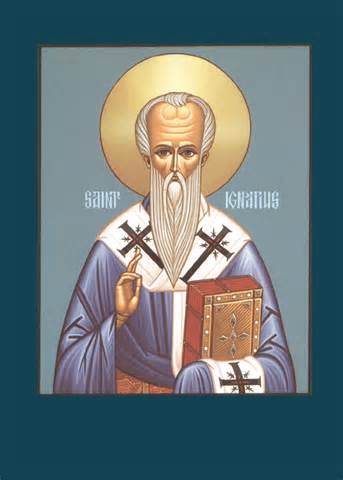
We have begun reading Getting to Know the Church Fathers in our summer book group. With Christians around the world facing so many different forms of persecution, the first chapter, on Ignatius of Antioch, brings an ancient perspective on a contemporary challenge. When Ignatius, (who was martyred around 115), was facing his end, he wrote:

I don't want to merely call myself a Christian--I want to back it up when it counts. For if I can back up my words, then I will be worthy of the name of Christian. I will be known as a man of faith even when the world can't see me anymore. It's not the things you can see that have true value. For example, our God Jesus Christ revealed his glory even more clearly when he ascended back to the Father and disappeared. Nothing is really achieved by trying to persuade people. Christianity's true power is discovered only when it is hated by the world. . . 
I pray that the events in that arena, and the unseen forces of wickedness behind them, will not conspire against me out of envy and prevent me from reaching Jesus Christ. Bring on the fire, bring on the cross, bring on the hordes of wild animals! Let them wrench my bones out of socket and mangle my limbs and grind up my whole body! Bring on all the hideous tortures from the Devil! Just let me get to Jesus Christ. Nothing on this wide earth matters to me anymore. The kingdoms of this world are entirely meaningless. I am at the point where I would rather die for Jesus Christ than rule over the whole earth. He alone is the one I seek--the one who died for us! It is Jesus that I long for--the one who for our sake rose again from the dead.

So be it.


41.0 Miles Back Home

The Justice and Compassion team returned home from Englewood, thanking God for the great week of ministry as well as the spiritual and personal growth team members experienced. Here is one last glimpse into their week at Urban Youth Outreach.

Thursday
Day Four
by Jonathan

Thursday was water day! After breakfast, the team went to North Avenue Beach, where we had some sandy devotions and prayer for the children and youth we met this week. We then jumped in the lake and had a great time of fun and coming together even more as a team. A few of us even managed to get yelled at by lifeguards for swimming out too far.

On our way back to UYO (Urban Youth Outreach), we stopped at Harold's Chicken on 53rd Street. The chicken was unbelievable and the catfish brought Jaimeson to tears. Around 1:30, we returned to the center and head out on prayer walks.

For my prayer group (Mrs.  Humphrey, Emma, Heather, Eric and myself), this walk was the most eventful one of the week. At the beginning, we prayed with another group as well as members of the community. While this was special on its own, it became a particularly unique experience when one man thanked God that people from such different communities and cultures were holding hands to pray to our Creator. His enthusiasm about the unity in Christ of both black and white communities surprised me, but wasn't far-fetched considering the lack of diversity in Englewood. Later on our walk, we met a man working on his pick up truck in a parking lot. When we asked to pray with him, he insisted that we only pray in God's name, not in Jesus' name. Surprised by this, we asked him about his beliefs and learned the he stopped praying to Jesus when his "spirit" told him that it didn't work, and now only prayed to God. He seemed surprised to learn that we believed the Bible. After a little more discussion, he drove off and we prayed that he would recognize his need for the Savior as a mediator between our sin and God's holiness.

Back at the center, the afternoon started off as usual. After some play time, we performed a contemporary skit of the story of the Prodigal Son, hoping to teach the kids that God will forgive them no matter what. (Unfortunately, most kids had trouble going from the story to application.)

Then came the water balloons. For several hours, young and older kids alike were running up and down the street and all around the center, soaking each other with balloons, squirt guns and buckets. Young men who had literally shot at each other with intent to kill a few days before were now laughing together and chasing each other with water rather than bullets. This was a powerful example of the spiritual and relational reconciliation that God is performing through UYO.

After dinner, we had a Bible study with a group that meets at the center every Thursday night. The study was lead by Markus Lewis, who had spent 40 years as a homeless addict before coming to Christ. Also at the study was a young man named Rashad, a dancer who recently came to Christ after a suicide attempt, and a girl named Trenia. Following the study, Rashad gave us a dancing lesson, which was very humbling. All in all, a fun, eventful and fruitful day.